
We get the question, and it’s a fair one. You’re looking at a fire feature that costs a few
thousand dollars, and the cover shows up as another line item on top of that. It makes sense to
wonder what you’re paying for.
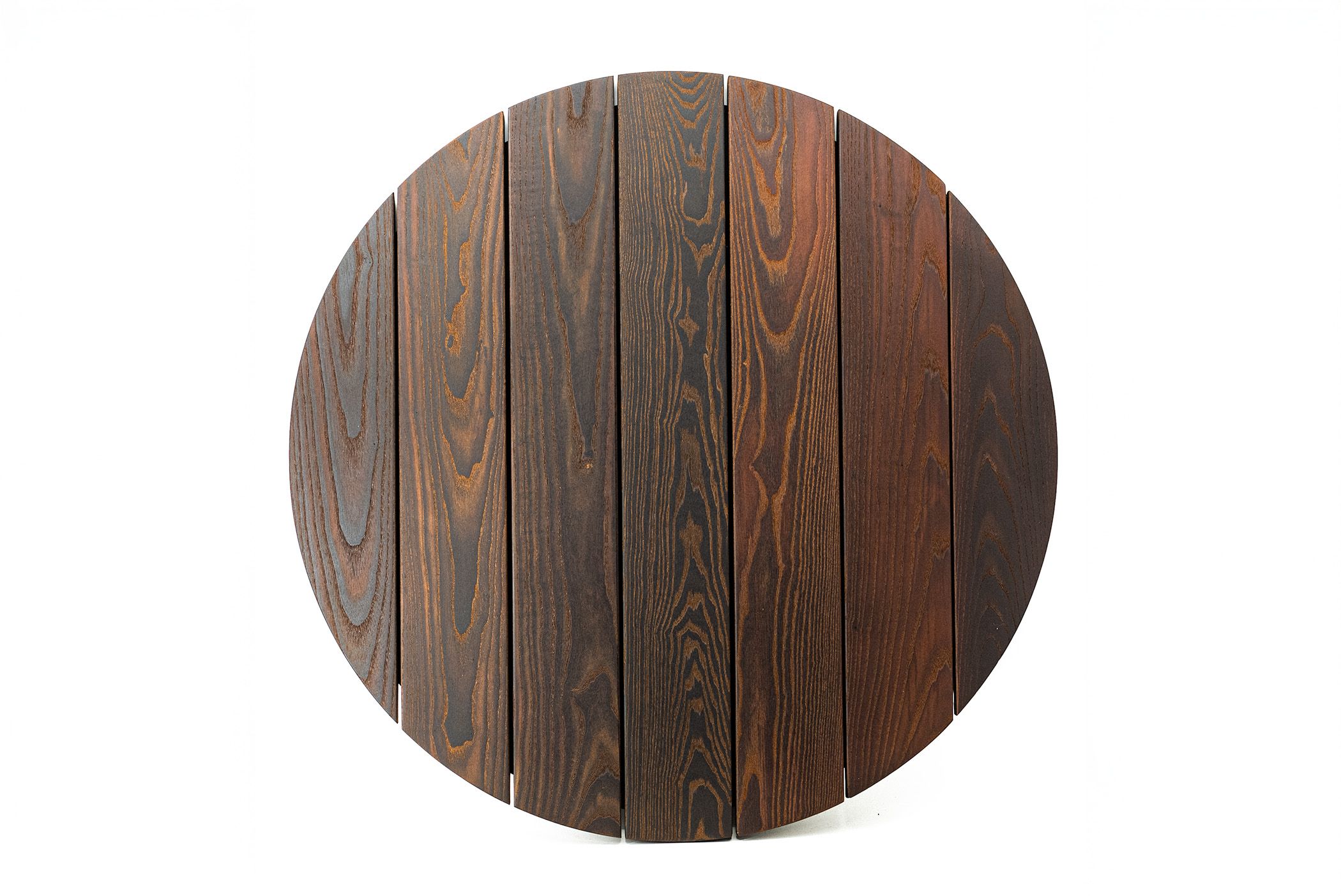
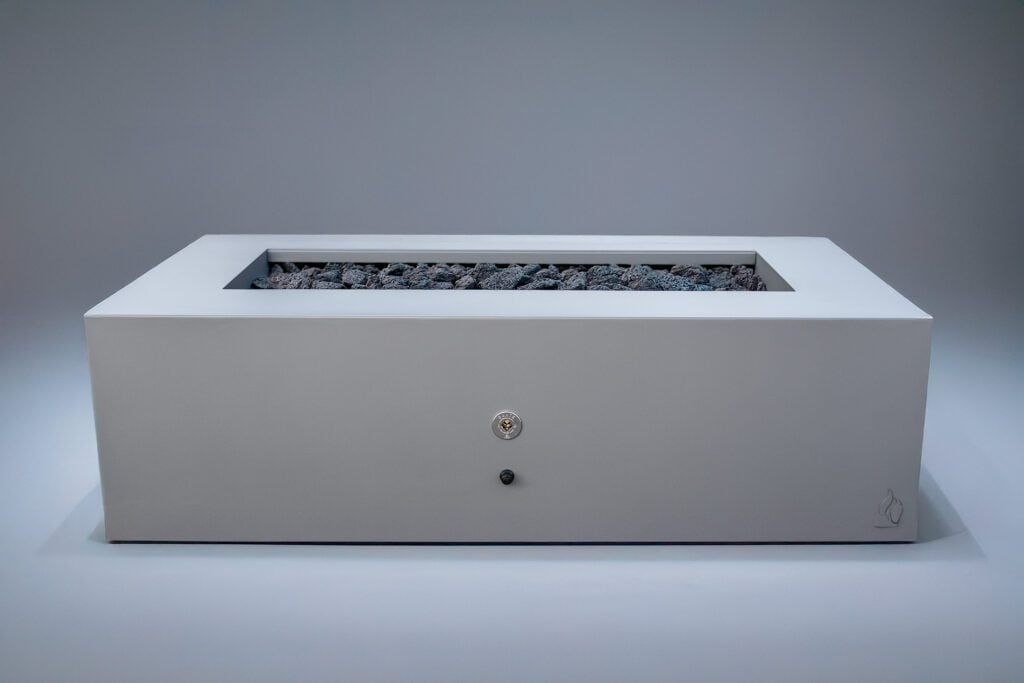
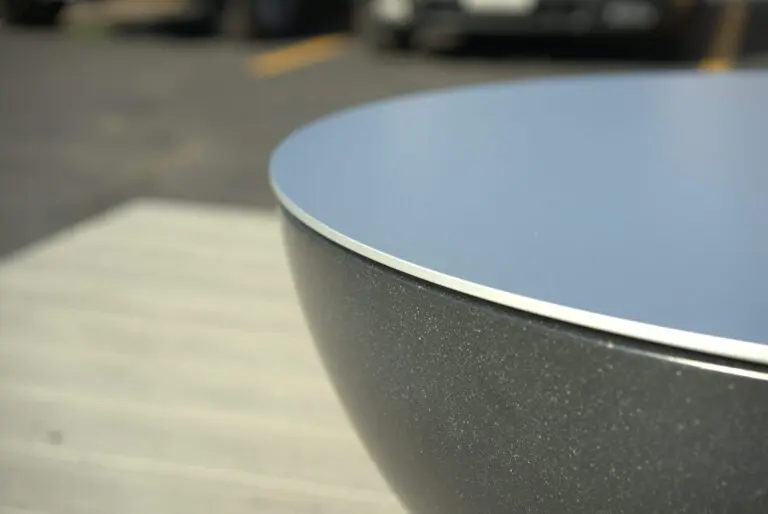
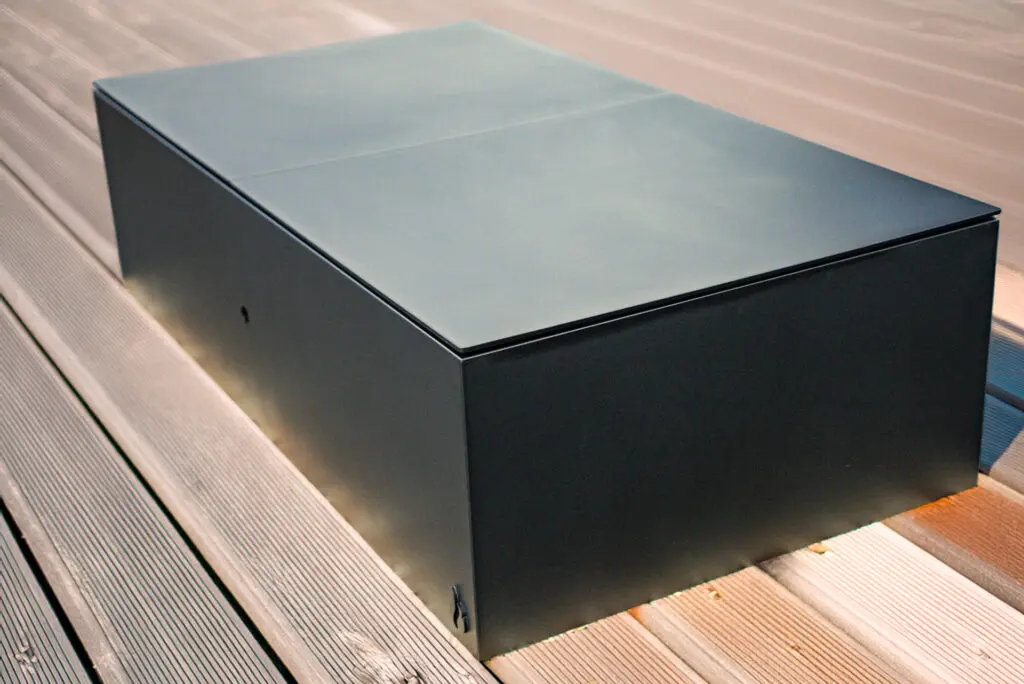
The short answer is that it’s not really a lid. It’s a fabricated aluminum component, built to the
exact dimensions of your specific fire feature, finished to match it perfectly, and engineered to
do its job for as long as the fire pit itself lasts. It’s closer to a final piece of the puzzle than it is to
something you’d throw on top at the end.
Here’s the longer answer.
It Starts With the Material
Every cover is made from premium American aluminum. Not stamped sheet metal from an
overseas supplier, and not commodity stock chosen because it’s cheap. This is domestic
aluminum, selected for the same reason we use it in our fire feature construction; it’s strong, it
handles temperature swings without warping, and it weathers gracefully over years of real
outdoor use.
Aluminum also takes a powder coat finish better than almost any other material, which turns out
to be one of the most important details in this whole equation. Because the cover doesn’t just
need to protect your fire feature; it needs to look like it was always part of it. A mismatched
cover sitting on top of a beautifully finished fire table is one of those small things that quietly
undermines everything else.
Hand-Cut, Hand-Routed
Each cover is cut to order after your fire feature goes into production. There’s no shelf of pre-
made sizes waiting in a warehouse somewhere. When your unit is being built, the cover is built
alongside it, matched to the exact opening dimensions of that specific piece.
After cutting, every cover is hand-routed. What that means in practice is that the edges, the
profiles, and the transitions between surfaces are all shaped individually by hand. This is the
step that turns a flat panel of aluminum into something that actually feels finished, something
with a clean architectural edge profile that sits flush and looks intentional when it’s in place.
It’s a step that takes real time. It’s also the step that most manufacturers skip entirely, which is a
big part of why most fire pit covers on the market look and feel like exactly what they are: an
afterthought cut from whatever material was left over.
Powder Coated to Match
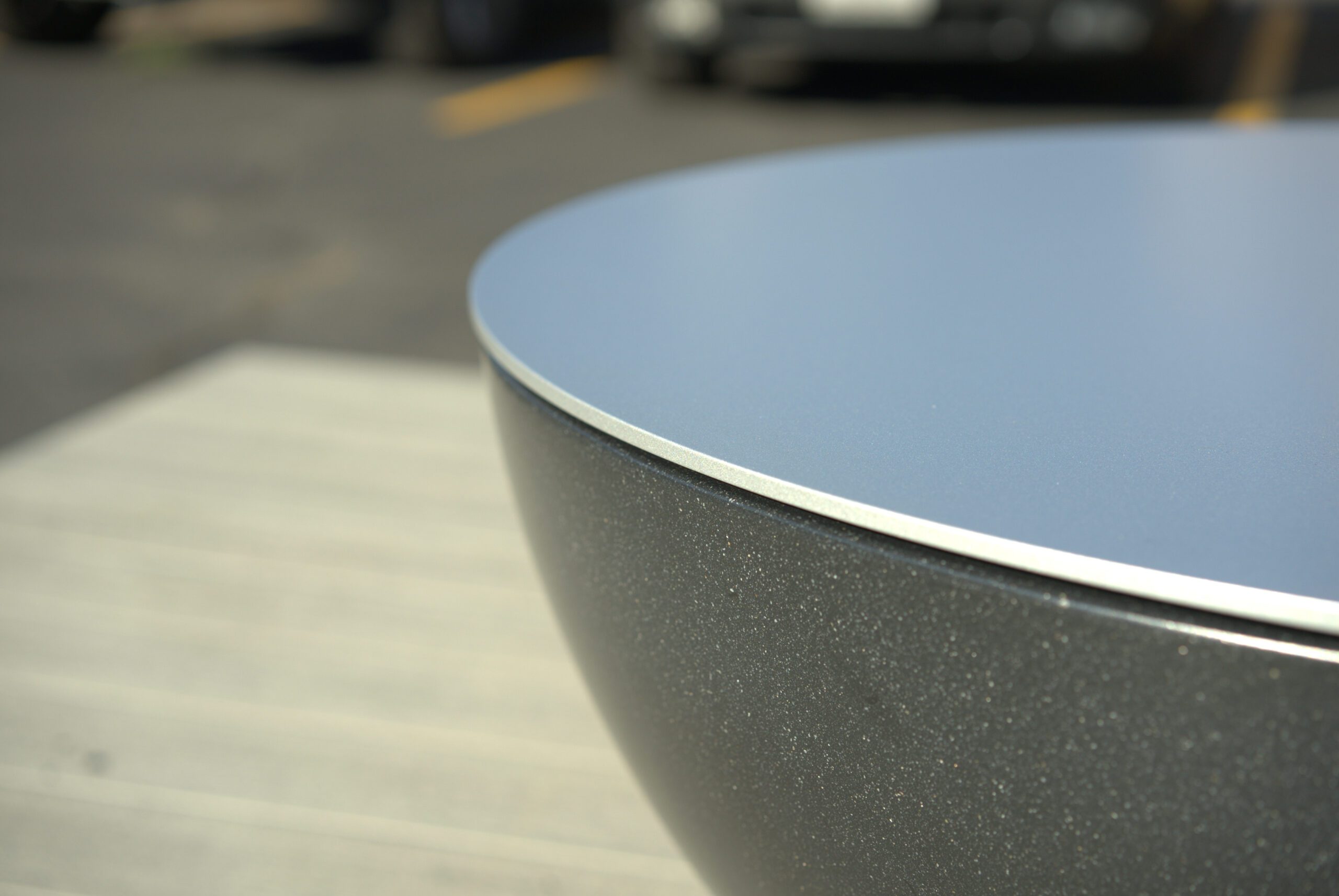
The cover goes through the same in-house powder coating process as the fire feature itself.
Same spray booth, same curing oven, same team applying the finish. We bring this up because
it’s genuinely rare; most manufacturers either outsource their finishing or skip the step on
accessories altogether. We keep it under one roof because the result matters too much to leave
to chance.
When the cover sits on the fire feature, the color, the texture, the sheen; it reads as one piece.
That’s because it was finished as one piece. And for something that’s going to be visible every
single day the fire pit isn’t lit, that consistency is the difference between a fire feature that feels
complete and one that always looks slightly off.
This commitment to safety is backed by our high-performance components. Our fire features use the premium Warming Trends Crossfire® Brass Burner System, which is ANSI Z21.97/CSA 2.41 safety certified. This critical safety data is an integral part of each BIM object, making it easier than ever to create designs that are not only beautiful but also fundamentally safe and code-compliant.
Sized to Protect, Not Just to Fit
There’s a specification detail here that matters more than it might seem at first glance. Our
covers extend 1.5 inches beyond the burner opening on every side, which means three inches
of total overhang beyond the opening size.
That dimension isn’t arbitrary. The overhang means the cover sits on top of the opening rather
than dropping down into it, which gives you a clean visual margin around every edge. It also
means rain, leaves, and snow shed outward instead of pooling against the burner perimeter.
And practically speaking, a cover with proper overhang and weight stays where you put it; wind
doesn’t catch it the same way it would a flush-fit panel.
The covers also have feet, roughly half an inch of clearance that lifts the underside off the fire
feature surface. This creates a channel of airflow underneath, which prevents moisture from
getting trapped between the cover and the top of the fire pit. That trapped moisture is how
finishes start to degrade over time, how water stains form, how small problems quietly become
bigger ones. The feet are a small detail that solves a real problem before it ever starts.
Why It Costs What It Does
If you were to add up the raw material, the hand cutting, the hand routing, the in-house powder
coating, the color matching, the dimensional precision, and the engineering that goes into the
overhang and the feet, you’d arrive at the price. There’s nothing hidden in it, and nothing
inflated. It’s a handmade component built to the same standard as the fire feature it sits on.
We could absolutely make a cheaper cover. Thinner material, outsourced finishing, generic
sizing, no routing, no feet. It would bring the price down and it would look fine for about a
season, maybe two if the weather cooperated. But that’s not the kind of work we do here, and
it’s not what your fire feature deserves after everything that goes into building it.
The Cover Is Part of the System
We think of the cover the same way we think about every other component in a complete fire
feature system. The burner, the body, the finish, the ignition, the cover; each one is designed
and built to work together, last together, and look like they’ve always belonged together.
A fire feature without a proper cover is exposed to every season, every storm, every stretch of
months when it’s sitting unused. The cover is what protects everything else you’ve invested in,
keeping the burner clean, the finish intact, and the system ready to perform the next time you light it.
It’s not really an accessory at all. It’s the component that makes the rest of the
investment hold up over time.
That’s what goes into a cover. That’s why it costs what it does.
Fire Isn’t a Feature Anymore. It’s the Architecture.
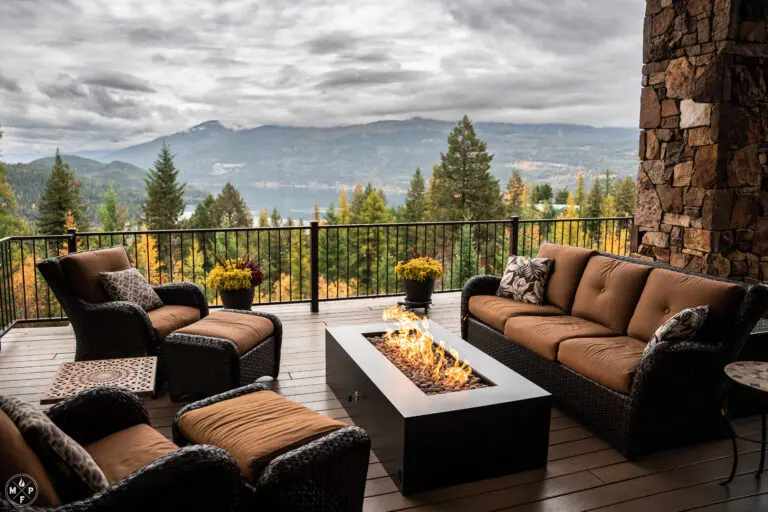
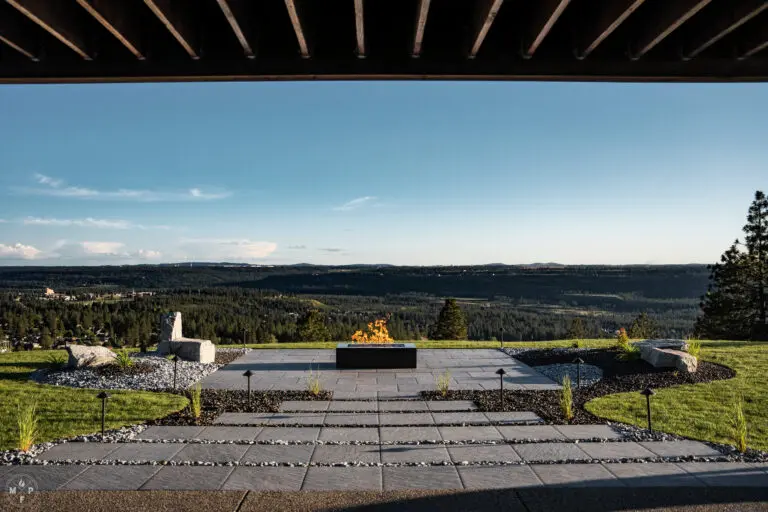
In the most thoughtfully designed outdoor spaces being built today, fire isn’t an afterthought. It’s the organizing principle. The element around which everything else — seating, sightlines, lighting, circulation — is arranged. The shift has been quiet, but it’s been total. And for the architects, landscape professionals, designers, and builders doing this work, the implications are significant.
What Design-Build Contractors Actually Need From a Fire System Partner
Fire features have become a standard expectation in premium outdoor design. Clients want them. Architects draw them in. And as the contractor, you’re the one who has to make the vision actually work — with real gas lines, real installation conditions, and a real client standing by.
6 Fire Pit Installation Mistakes We See Every Week (and How to Avoid Them)
Introduction: Fire Pits Don’t Fail, Planning Does When someone calls us with a fire pit problem, it’s almost never because of the