
Introduction: Why Most People Buy the Wrong Size Fire Pit
One of the most common mistakes we see homeowners make isn’t about style, fuel type, or even safety.
It’s size.
Too small, and the fire disappears once people sit down.
Too large, and the space feels crowded, overheated, or unusable.
Fire pit size isn’t about square footage alone. It’s about how people gather, how heat radiates, where seating actually lands, and how the fire interacts with the space around it.
This guide walks you through exactly how to size a fire pit the right way — whether you’re working with a compact patio, a covered pergola, or a large open backyard.
Step 1: Start With Seating Distance (Not Patio Size)
Most people start by measuring their patio.
That’s backwards.
The correct starting point is where people will actually sit.
The comfort zone rule:
- Ideal seating distance from flame: 18–24 inches
- Beyond 36 inches, heat drops off fast
- Closer than 12 inches becomes uncomfortable
This means your fire pit needs to be sized so the flame sits inside the seating circle, not floating in the middle of dead space.
Practical takeaway:
If you plan to seat 4–6 people comfortably, a fire pit under 36″ usually feels undersized.
If you’re seating 6–10 people, you’ll want a fire pit 42″–60″ or larger, depending on layout.
Step 2: Fire Pit Diameter vs Flame Footprint (This Is the Part Most Guides Miss)
A fire pit’s outer size and its flame footprint are not the same thing.
What actually warms people is the burner opening, not the tabletop.
For example:
- A 36″ table may only have a 16–18″ burner opening
- A 60″ table can support a 30–36″ burner opening
That difference is massive in real-world heat performance.
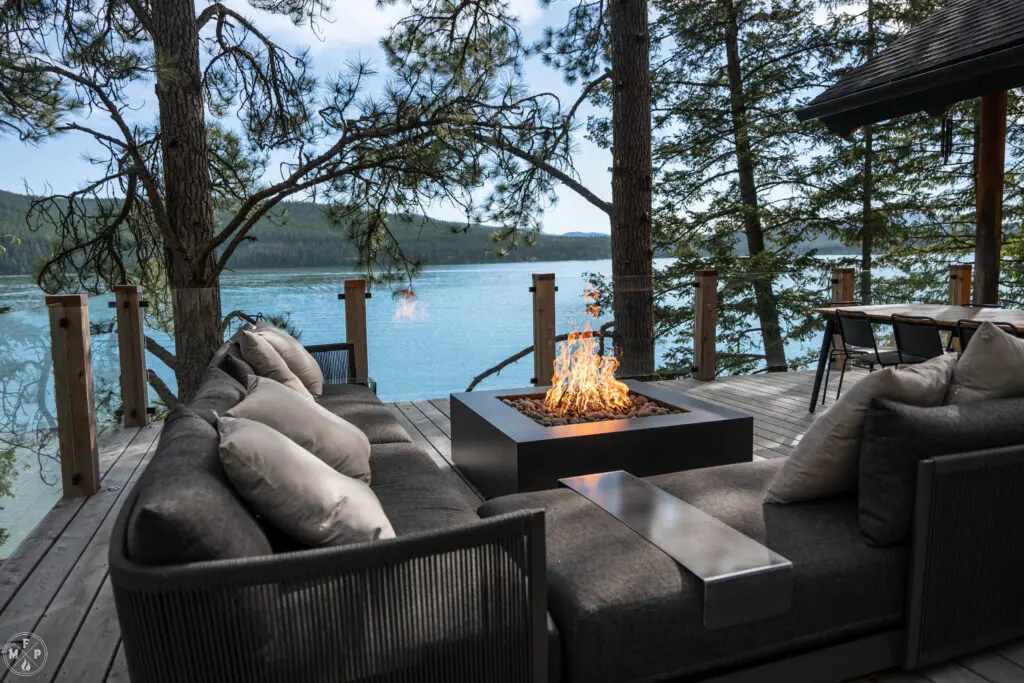
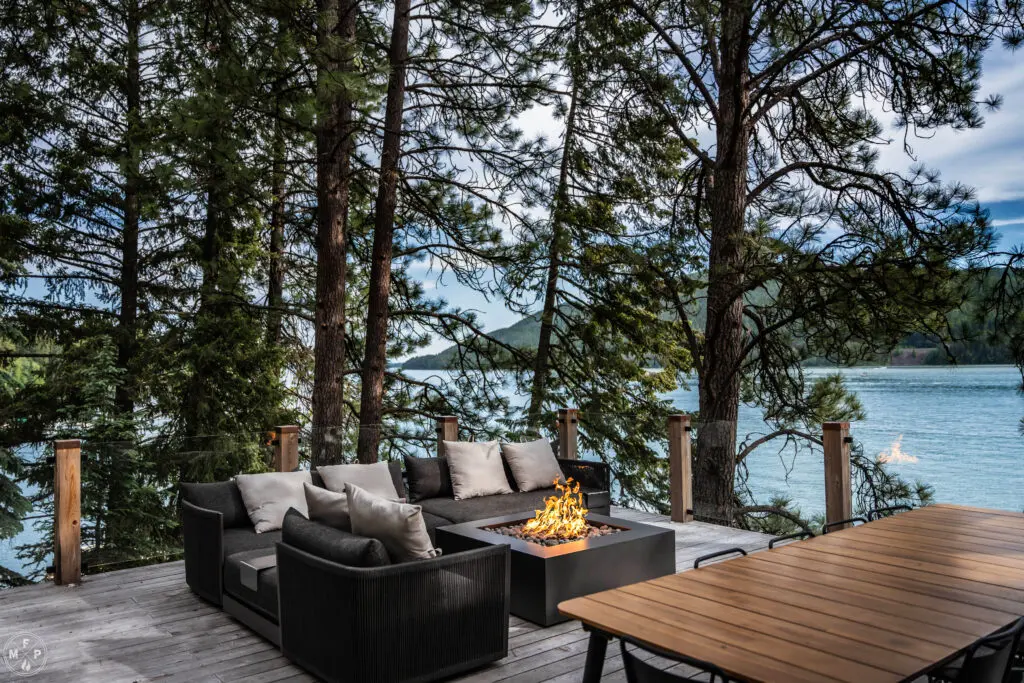
Rule of thumb:
Anything smaller looks decorative instead of functional
Flame footprint should occupy 50–65% of the fire pit’s interior
Step 3: Match Fire Pit Size to How the Space Is Used
Let’s break this down by real scenarios.
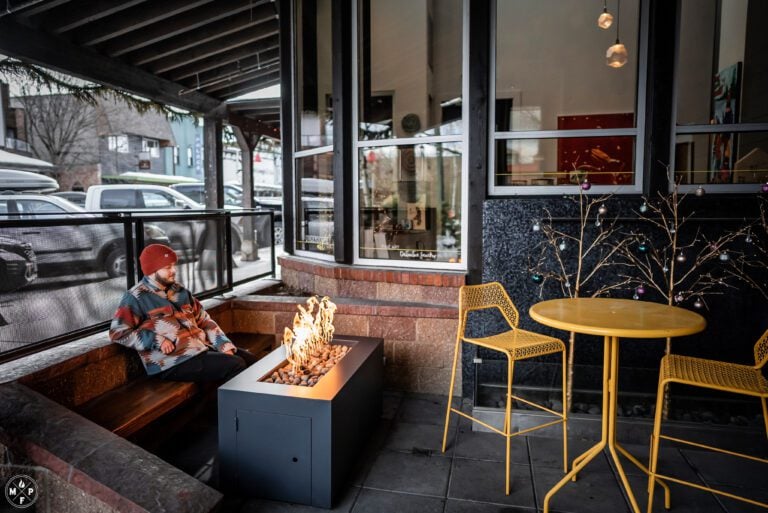
Small Patios & Intimate Spaces
Best sizes: 30″–36″
Best use: Conversation, light warmth, ambiance
These work well for:
- Townhomes
- Balconies
- Small covered patios
Example:
Compact footprint, strong heat for close seating, easy to place.
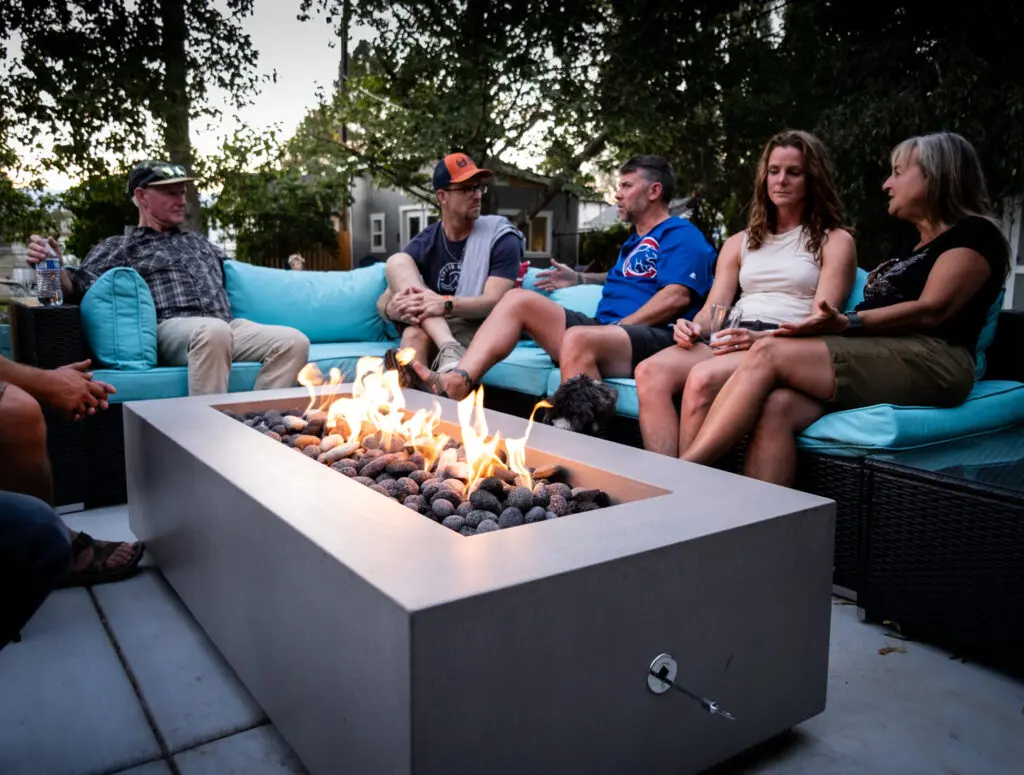
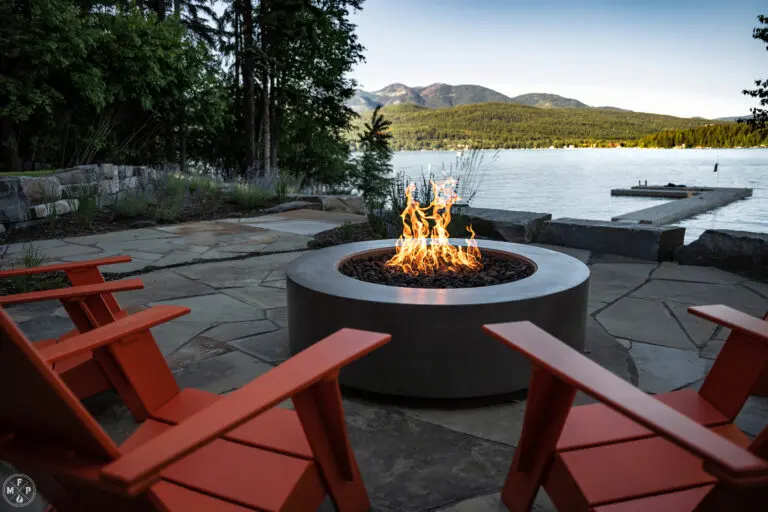
Medium Patios & Everyday Gathering Spaces
Best sizes: 42″–48″
Best use: Family seating, regular use, balanced heat
This is the sweet spot for most homes.
Example:
Strong flame presence without overwhelming the space.
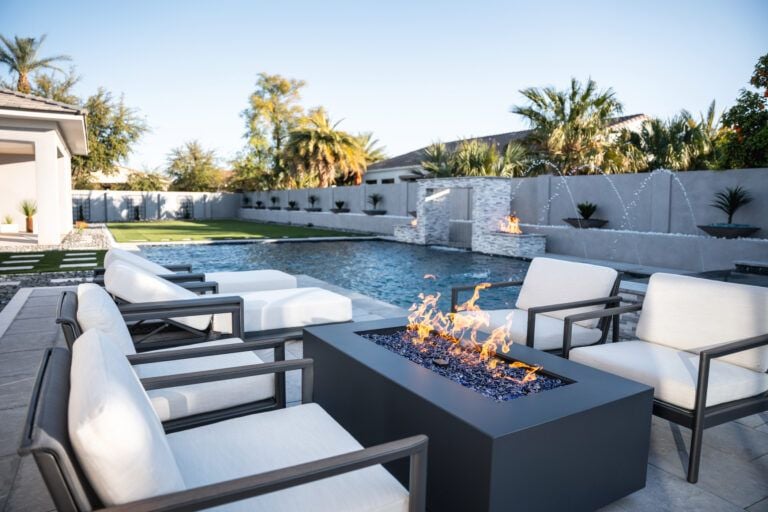
Large Patios & Statement Outdoor Rooms
Best sizes: 56″–60″+
Best use: Entertaining, large seating groups, open backyards
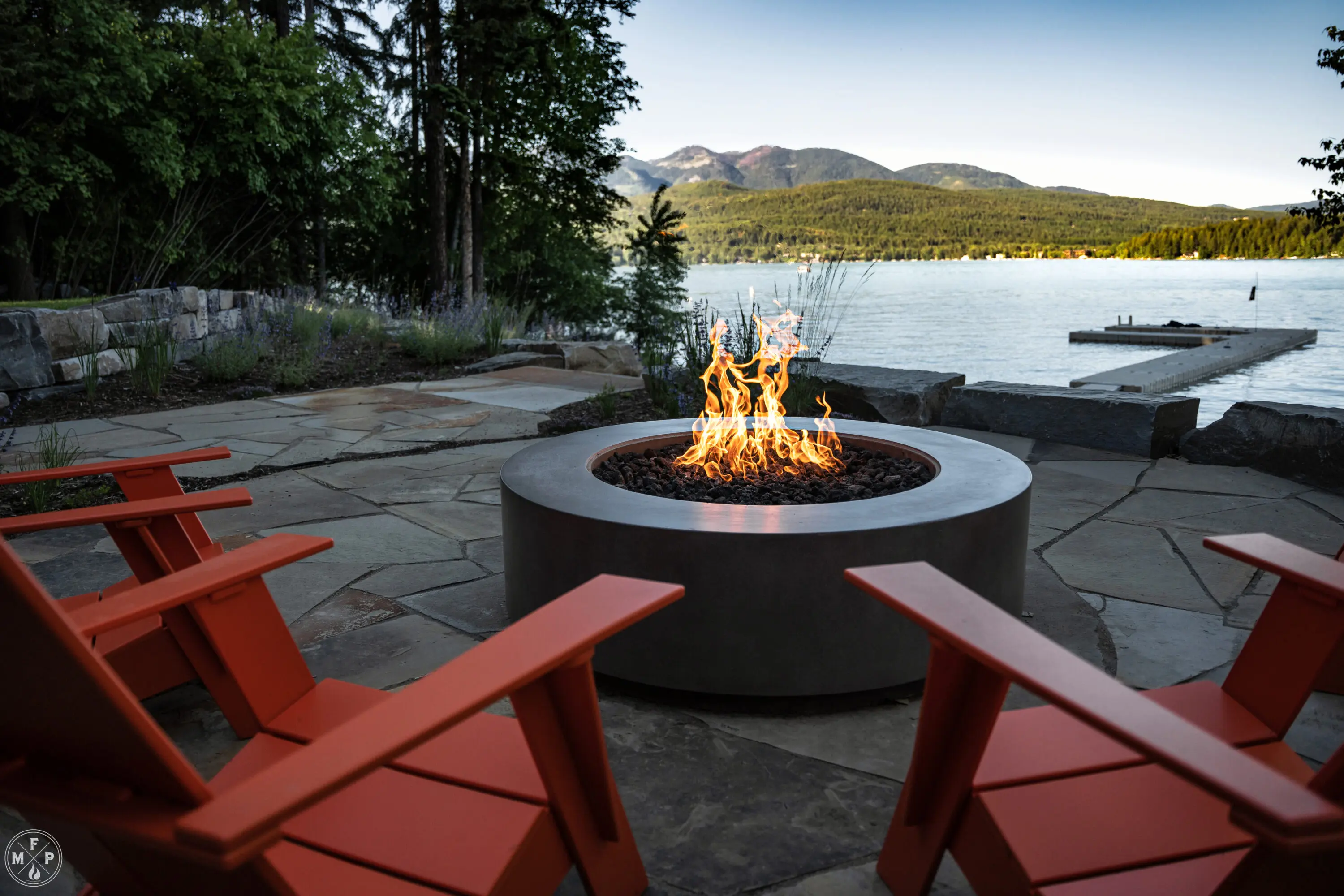
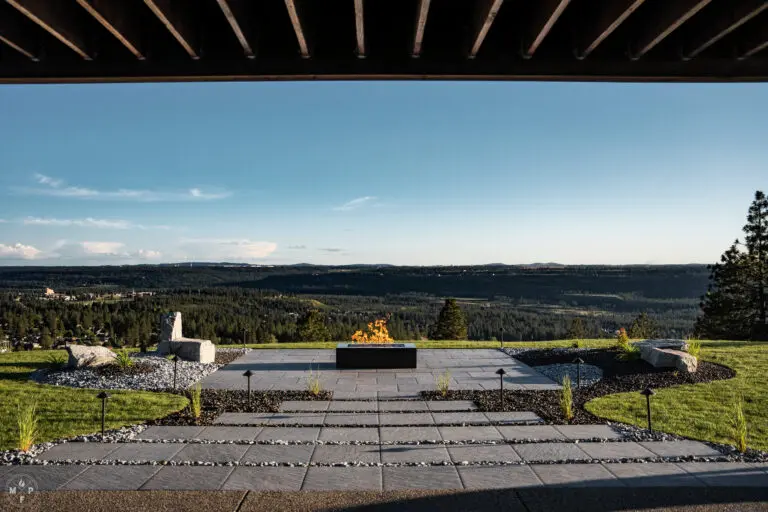
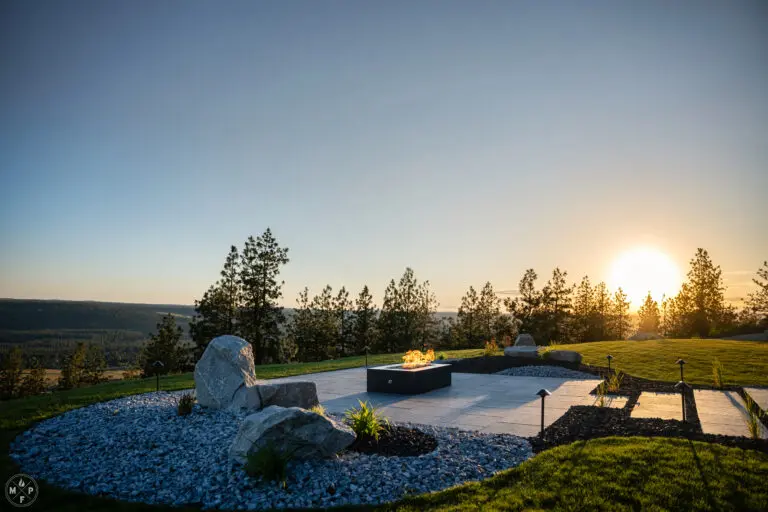
Here, the fire pit becomes the anchor of the space.
Examples:
Step 4: Covered Patio vs Open Yard — Size Changes Everything
Fire pits behave differently under a roof.
Under a covered patio:
- Heat reflects downward
- Flame height matters more than raw BTUs
- Oversizing can make the space uncomfortable
In open yards:
- Heat dissipates faster
- Larger burners perform better
- Bigger tables feel more balanced visually
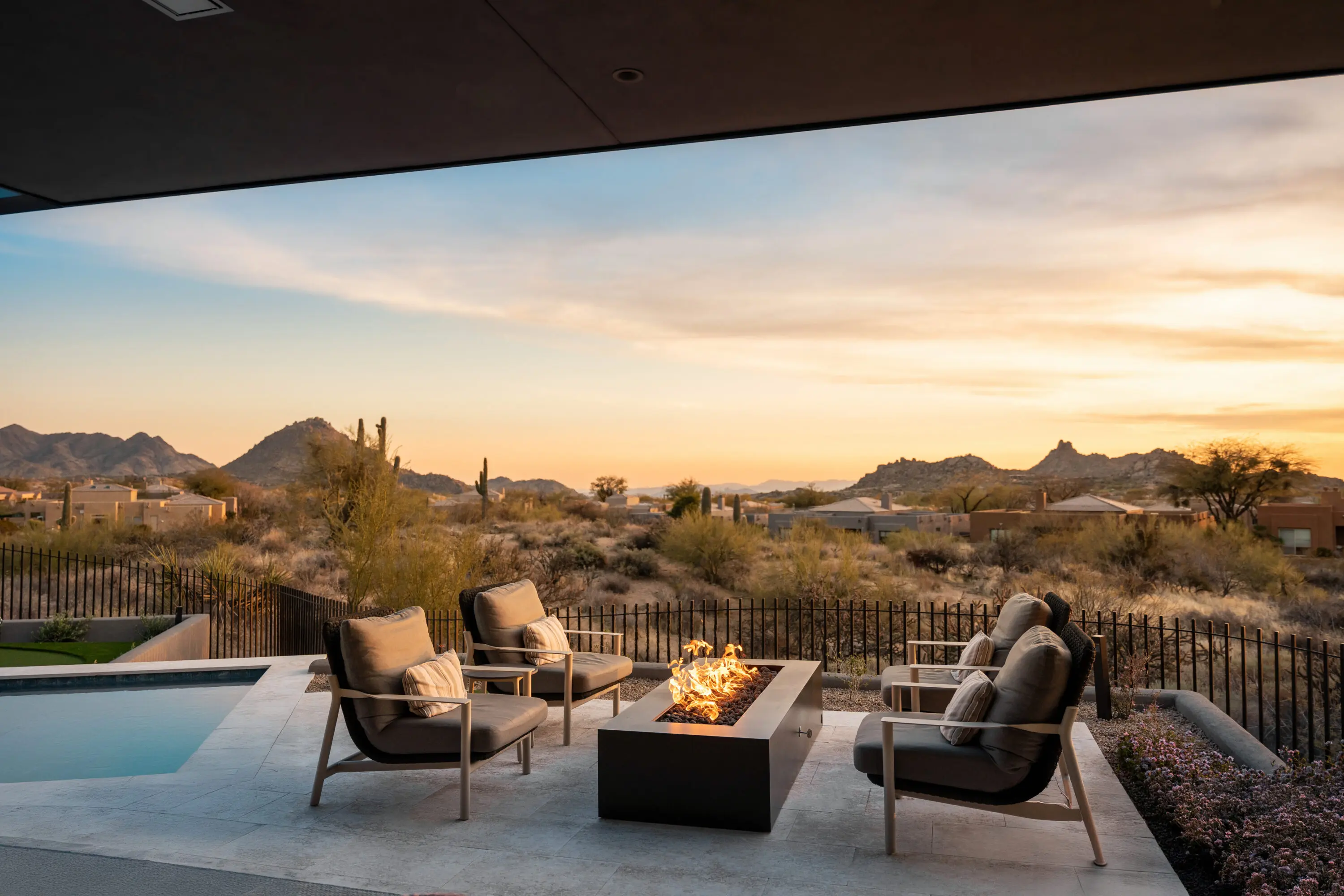
Covered patio sizing guidance:
- Prioritize ventilation and clearance
- Stay toward the lower end of size ranges
- Favor low-profile tables with strong burners
Step 5: Burner Size Must Scale With Table Size
A common mistake is buying a large fire table with an undersized burner.
That creates:
- Weak flames
- Poor heat
- Disappointing performance
General burner pairing:
- 36″ tables → 60–84K BTU range
- 42–48″ tables → 120–180K BTU range
- 56–60″ tables → 180–300K+ BTU range
But BTUs only work if your gas line supports them.
Step 6: Wind, Elevation, and Real-World Adjustments
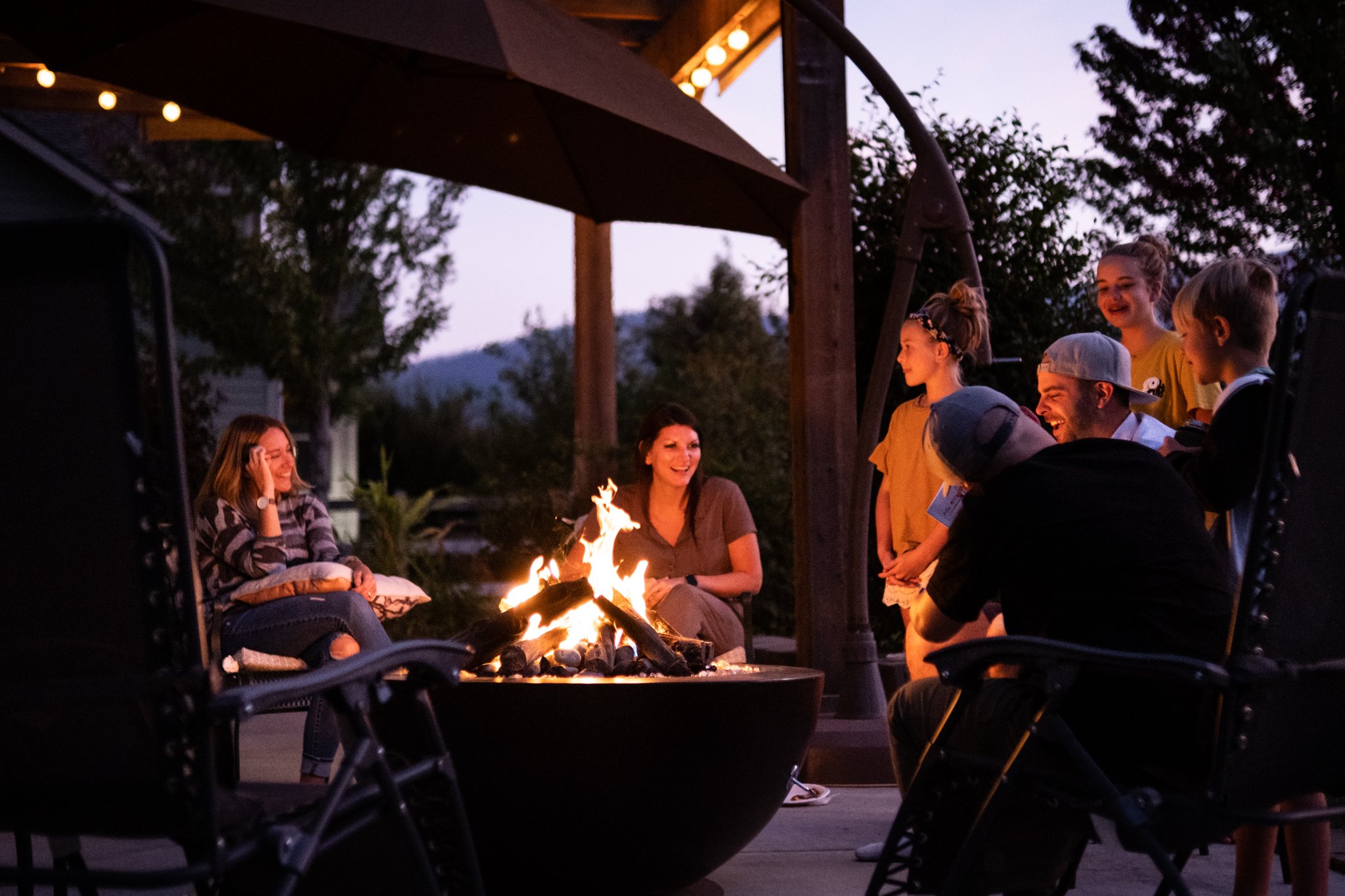
Environmental factors matter more than people realize.
If your space has:
- Regular wind
- Higher elevation
- Partial enclosure
You should:
- Increase burner size one step
- Consider a wind guard
Avoid ultra-low-output burners
Common Fire Pit Size Mistakes (We See These Weekly)
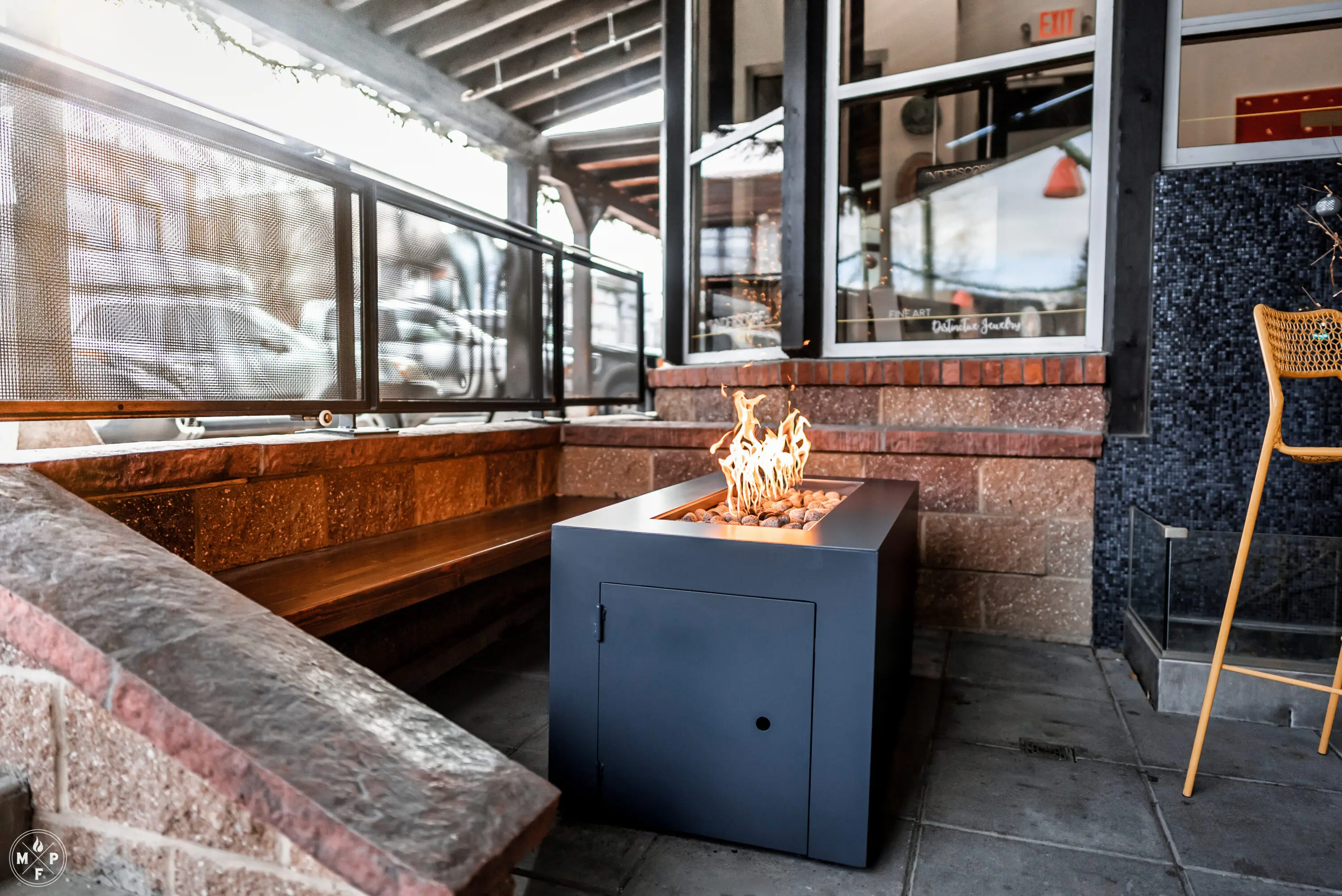
- Choosing based on looks alone
- Ignoring seating distance
- Oversizing under a roof
- Undersizing the burner
- Forgetting gas supply limitations
Final Recommendation: Size the Fire Pit for People, Not the Patio
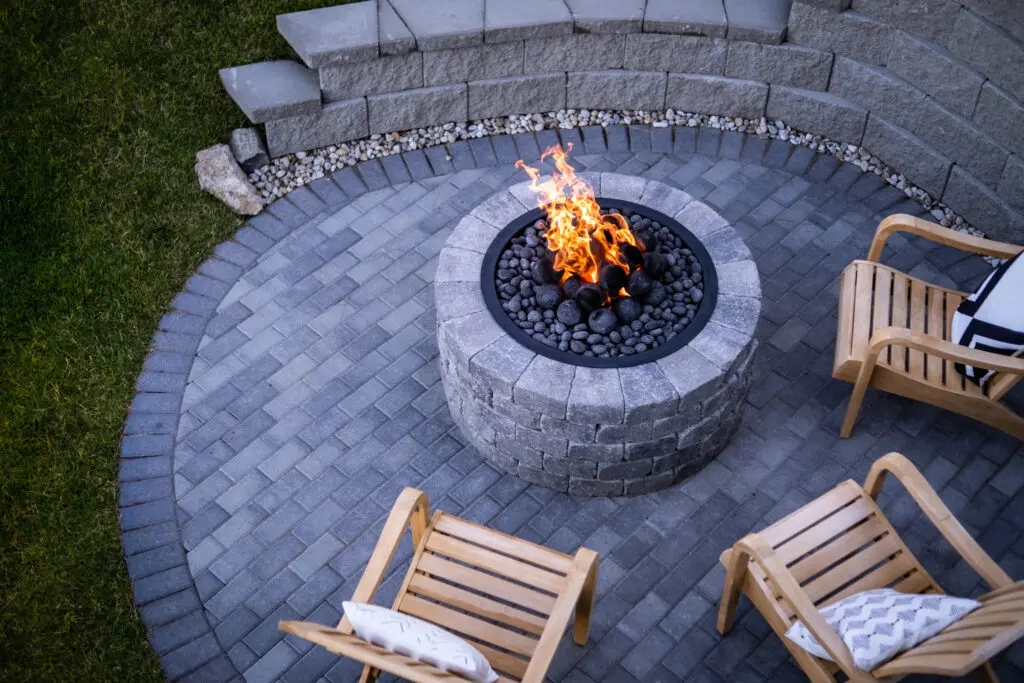
A well-sized fire pit disappears into the experience.
People don’t think about dimensions — they just feel warm, comfortable, and drawn into the space.
If you’re unsure, it’s always better to:
- Match the fire pit to how the space will actually be used
- Slightly oversize the burner
- Choose a table that supports real flame presence
Want Help Choosing the Right Size?
We help homeowners and designers size:
- Fire tables
- Burners
- BTUs
- Gas lines
- Clearances
- Media
Explore:

What Goes Into a Cover
We get the question, and it’s a fair one. You’re looking at a fire feature that costs a few
thousand dollars, and the cover shows up as another line item on top of that. It makes sense to
wonder what you’re paying for.
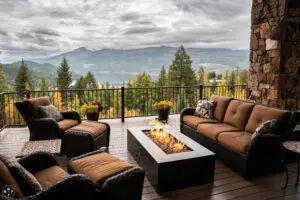
Fire Isn’t a Feature Anymore. It’s the Architecture.
In the most thoughtfully designed outdoor spaces being built today, fire isn’t an afterthought. It’s the organizing principle. The element around which everything else — seating, sightlines, lighting, circulation — is arranged. The shift has been quiet, but it’s been total. And for the architects, landscape professionals, designers, and builders doing this work, the implications are significant.
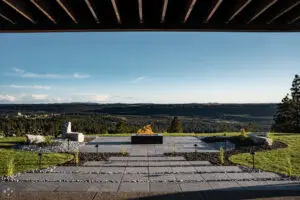
What Design-Build Contractors Actually Need From a Fire System Partner
Fire features have become a standard expectation in premium outdoor design. Clients want them. Architects draw them in. And as the contractor, you’re the one who has to make the vision actually work — with real gas lines, real installation conditions, and a real client standing by.