

Introduction: The Most Common Question in Outdoor Design
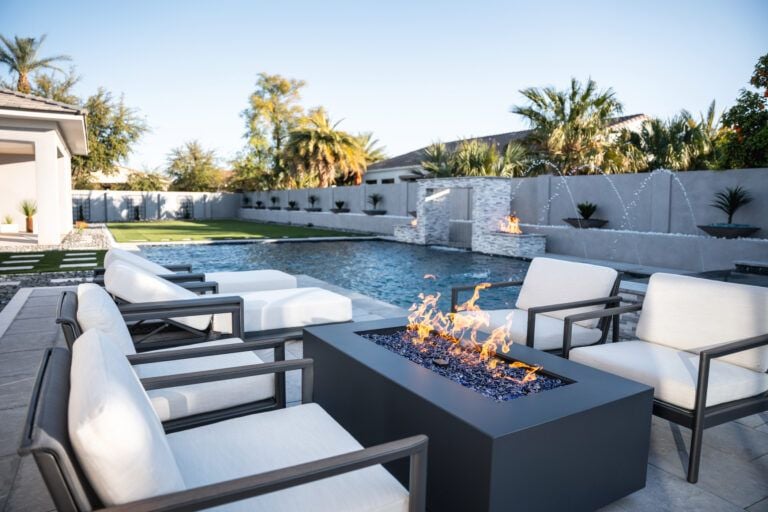
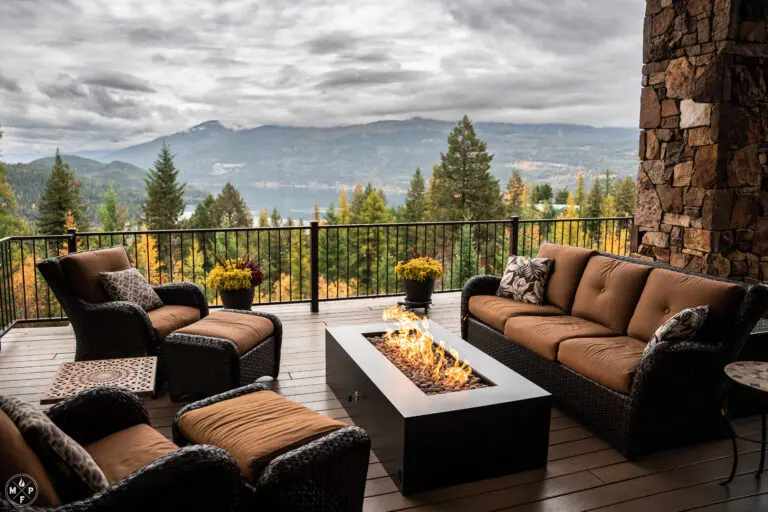
Across the U.S., outdoor living is shifting from “nice-to-have” patios to fully designed year-round outdoor rooms—complete with pergolas, swings, heaters, outdoor kitchens, and fire features.
And naturally, everyone asks:
“Can I put a fire pit under my covered patio?”
The short answer:
Yes—but only if you set it up correctly.
We’ve walked hundreds of homeowners, designers, and contractors through this question, and there are a few key factors that determine whether your fire feature is safe—and whether it will actually perform the way you want it to.
This guide gives you everything you need:
clearances, ventilation, gas type, burner choice, wind/elevation considerations, and specific do/don’t scenarios.
Yes, You Can Put a Fire Pit Under a Covered Patio — If It’s Gas
Safe Options
- Natural gas fire pits
- Propane fire pits
- Linear tables
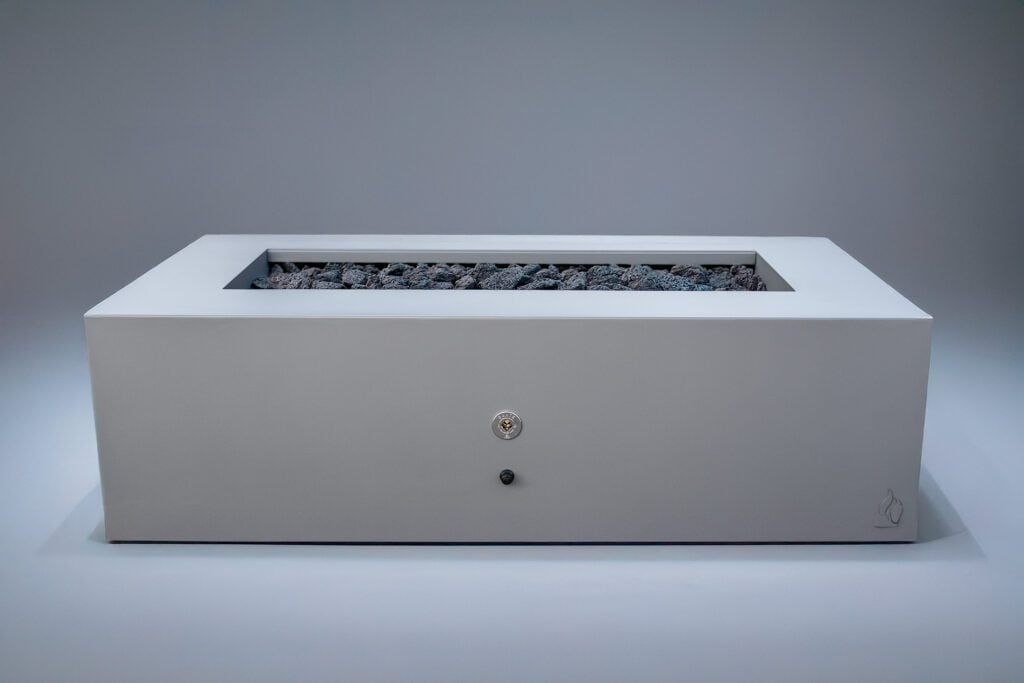
- Low-profile concrete or steel fire tables
NOT Safe
- Wood-burning fire pits
- Smokeless wood cylinders (still emit sparks + heat plumes)
- Chimeneas
- Any open-flame wood system
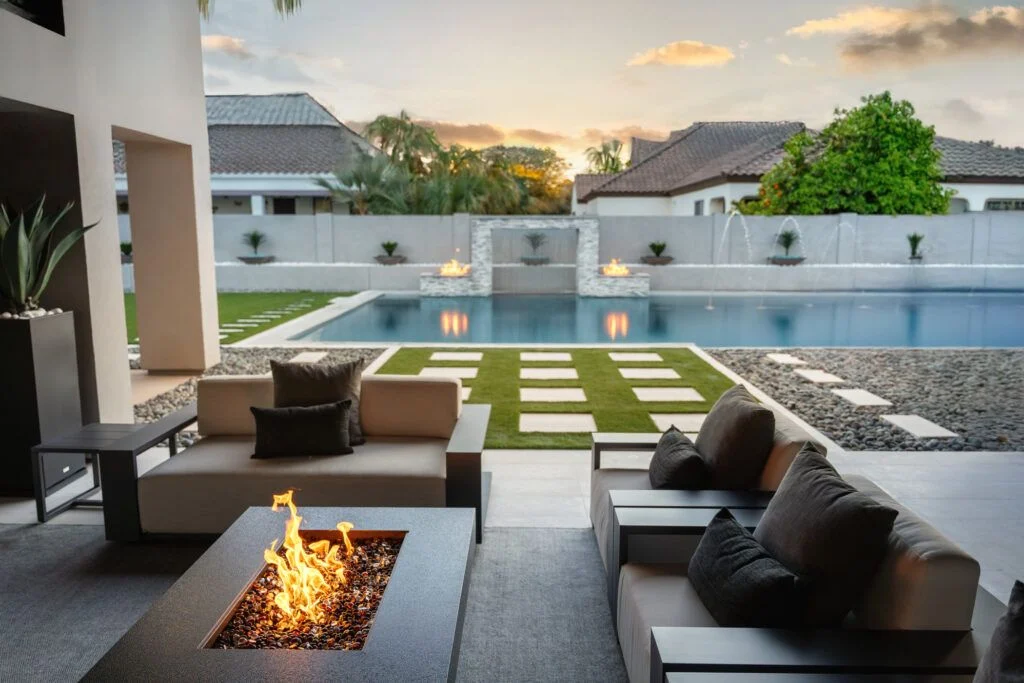
Vertical Clearance (The #1 Most Important Factor)
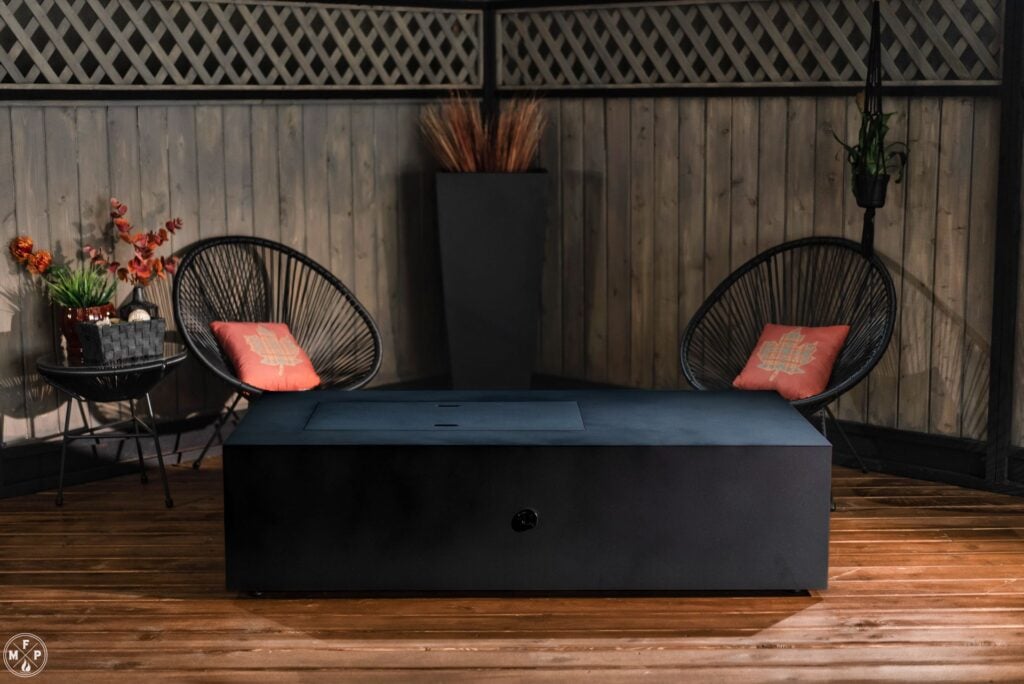
Every gas fire pit requires a clear vertical space above the flame. For covered patios:
Safe Vertical Clearances
- Minimum: 84″
- Ideal: 96–120″
- High-output Crossfire burners: Use the upper end of this range
Best product types for low-to-mid ceilings:
Ventilation: The Make-or-Break Safety Requirement
BTUs don’t make a fire pit unsafe—a lack of ventilation does.
Your covered patio must have:
- At least two open sides
- Free airflow under the fire table
- Adequate vent openings in the enclosure or structure
- No glass or vinyl walls trapping heat
This is where many designs go wrong. A closed sunroom? Not safe. A 3-season vinyl window system? Not safe. But a pergola? Almost always safe.
Gas Line Size Matters More Under a Roof
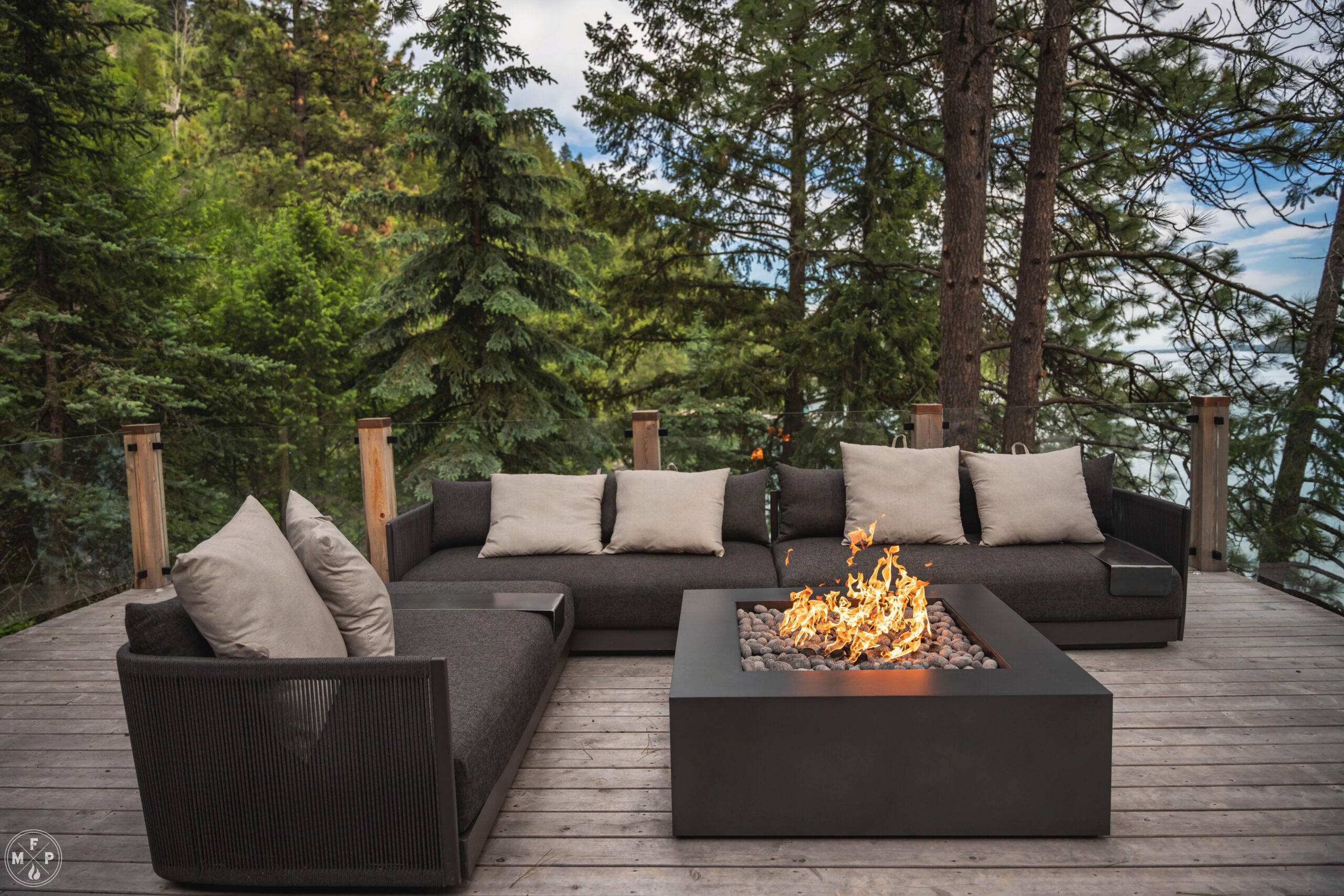
Weak flames + covered patio = wasted money.
Since a roof traps more heat, you need:
- Proper BTU supply
- Proper pipe diameter
- Fewer elbows + restrictions
Typical gas line sizes for covered patio setups:
- Up to 150K BTU → ½” line
- Up to 250K BTU → ¾” line
- Over 300K BTU → 1″ line recommended
Propane vs Natural Gas Under a Covered Patio
Natural Gas
Best choice for patios with high BTU burners or long run distances.
Propane
Works great — IF you meet ventilation + tank placement rules.
Tank Rule:
Do not store a propane tank inside an enclosed cabinet unless the fire feature is specifically engineered for it.
Burner Type Matters Under a Roof (Crossfire® Performs Best)
Under a covered structure, you want a burner that:
- Resists wind
- Burns clean
- Produces tall flame at lower throttle
- Mixes oxygen efficiently
- Minimizes yellow-tipping and soot
This is exactly what the Warming Trends Crossfire® Brass Burners do. Your recommended burner models for covered patios:
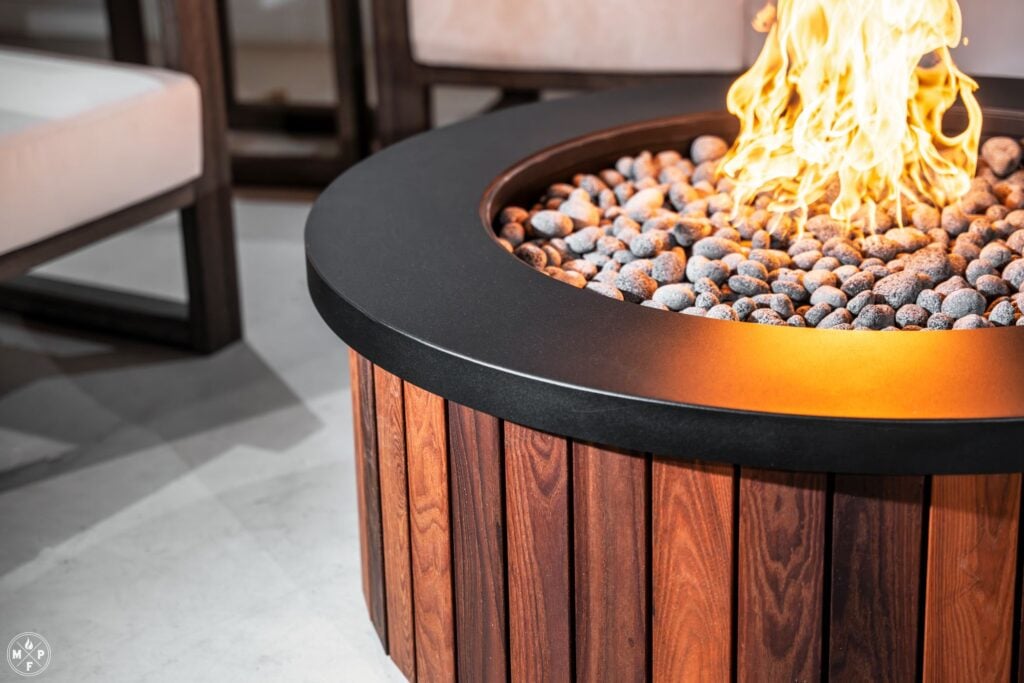
Linear Burners
Safest Under Fire Tables For Roofs (Here Are the Best Options)
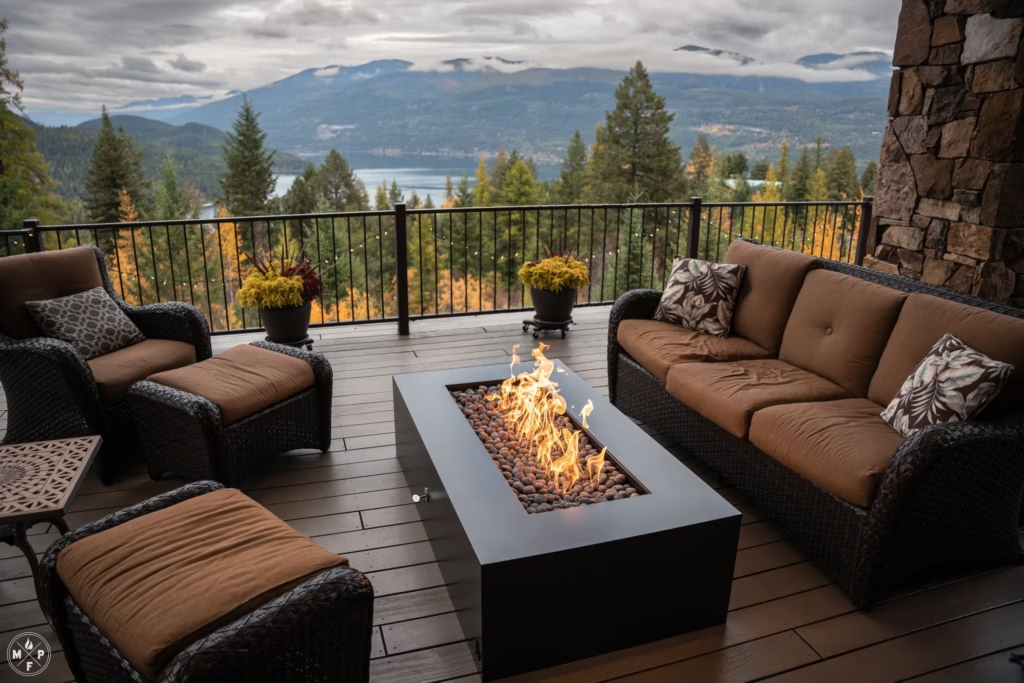
For Most Patios (Best-Seller)
Olympic Fire Table (48″ & 60″)
- Lower flame height
- Strong BTU output
- Multiple powder-coat finishes
- Great for pergolas
For Small or Low-Ceiling Patios
For Modern Covered Patios
For High-End Covered Outdoor Rooms
If You Have Wind—Go Up One Burner Size
Even under a cover, crosswinds can pull heat away from the seating area.
Wind-adjusted rule:
If your patio gets consistent wind, choose the next burner size up or use a wind guard.
Conclusion: Yes, You Can Absolutely Have a Fire Pit Under a Covered Patio — If You Build It Right
Done correctly, a covered-patio fire pit becomes one of the most beautiful, cozy, and functional parts of your home.
If you want help sizing:

- The burner
- The fire table
- BTUs
- Gas line
- Clearances
- or components (plates, pans, ignition, media)
We can help.
- Explore the Venture Series
- Shop Crossfire Burners
- Read the Gas Line Sizing Guide
- Read the Fire Pit Ventilation Guide
- Read the BTU Guide
Clearance & Safety Checklist
✔ Roof clearance = at least 84–120″
✔ Two open sides for ventilation
✔ Burner properly sized for the pit opening
✔ Gas line sized for total BTUs
✔ Non-combustible surfaces nearby
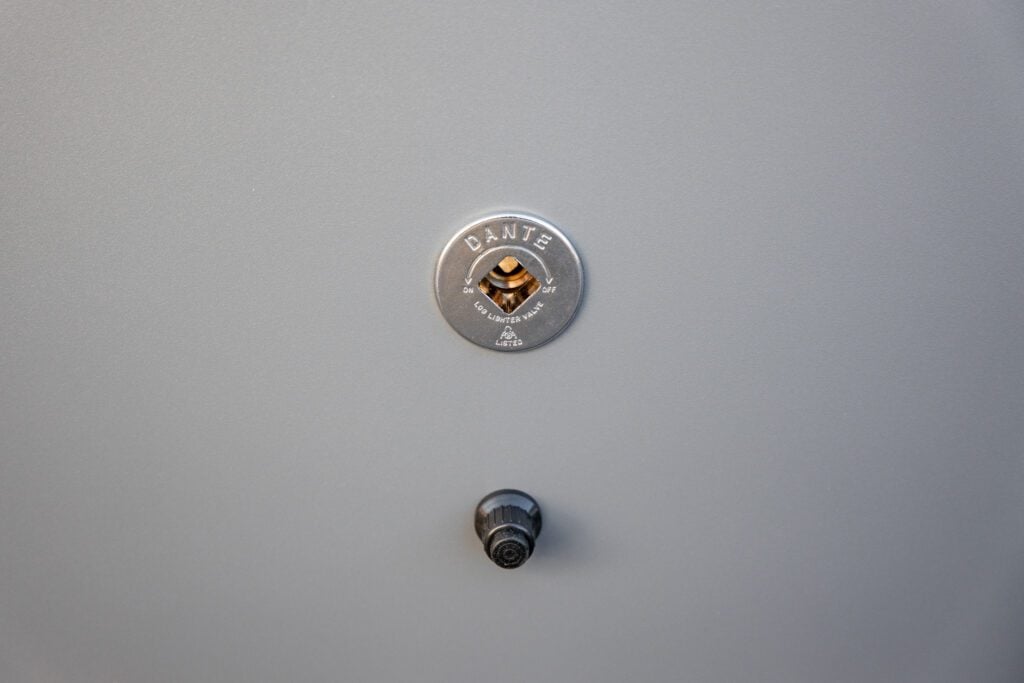
✔ Shutoff valve within reach
✔ Propane tank correctly placed
✔ No enclosures that could trap heat
✔ Fire media not overpacked
✔ Burner not installed below grade
✔ Manufacturer’s ignition placed correctly
FAQs
Q: Can I use my propane fire pit under a pergola?
Yes—as long as your enclosure has proper ventilation and meets clearance guidelines.
Q: How high should a ceiling be over a fire pit?
At least 84″, but ideally 96–120″.
Q: Is it safe to use a fire pit under a louvered roof?
Yes, if the louvers open and the structure meets ventilation + clearance requirements.
Q: Can I put a wood-burning fire pit under a covered patio?
No—never.
Q: Which fire pits work best under a patio cover?
Lower-profile gas fire tables like the Olympic 60“, Yellowstone 36“, and Glacier 56“.
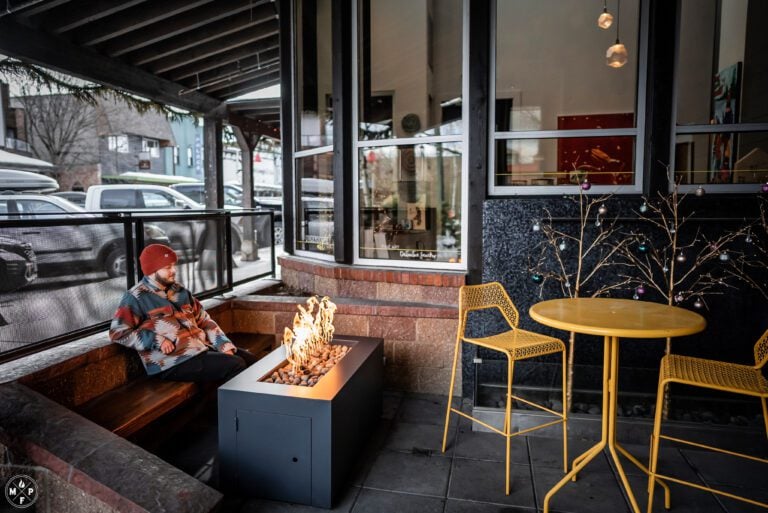

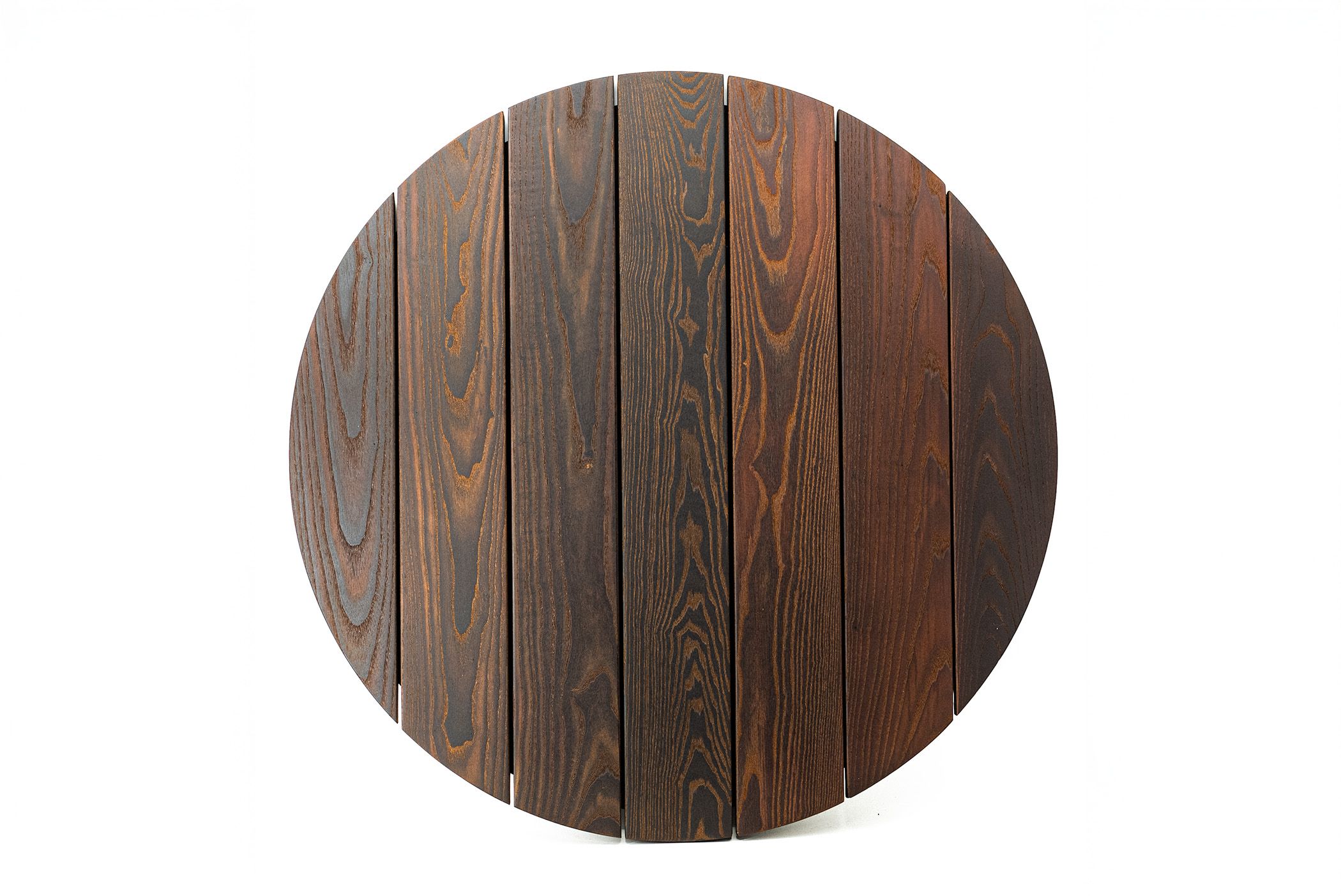
What Goes Into a Cover
We get the question, and it’s a fair one. You’re looking at a fire feature that costs a few
thousand dollars, and the cover shows up as another line item on top of that. It makes sense to
wonder what you’re paying for.
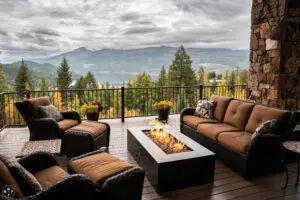
Fire Isn’t a Feature Anymore. It’s the Architecture.
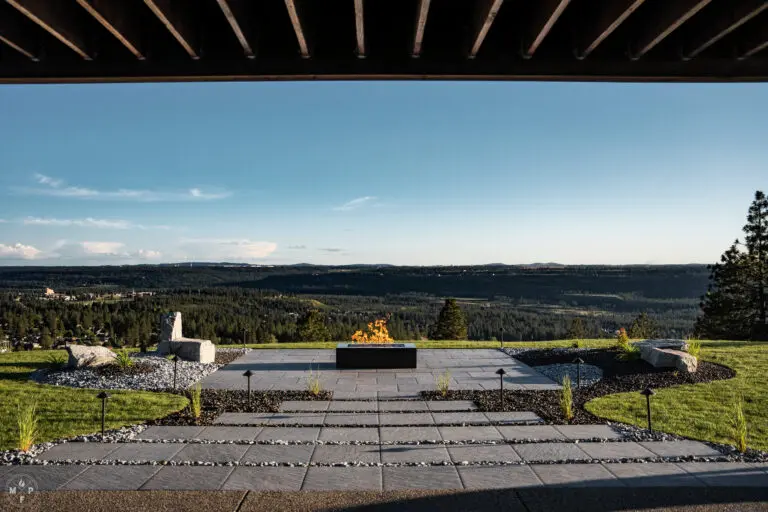
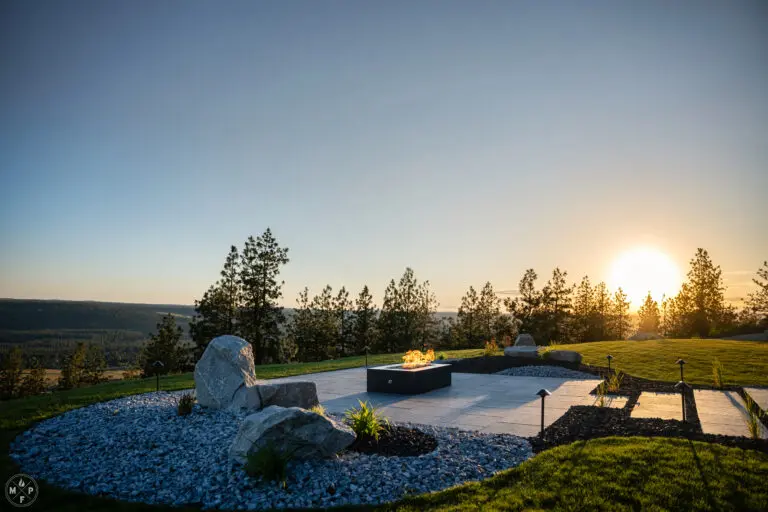
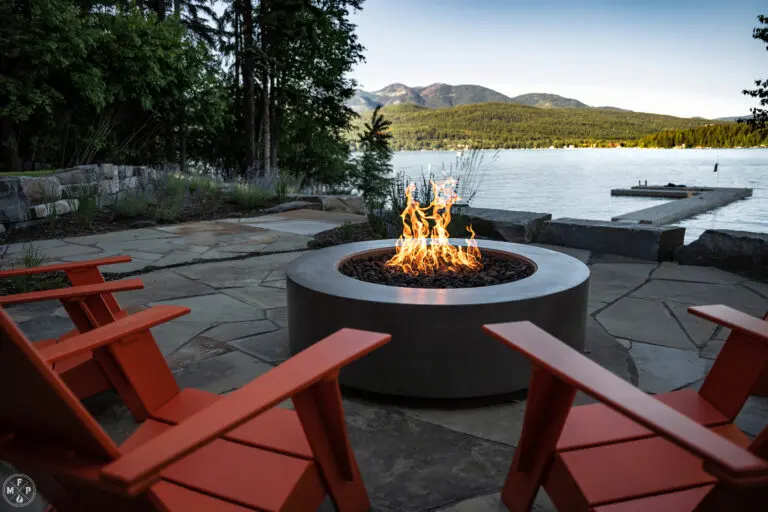
In the most thoughtfully designed outdoor spaces being built today, fire isn’t an afterthought. It’s the organizing principle. The element around which everything else — seating, sightlines, lighting, circulation — is arranged. The shift has been quiet, but it’s been total. And for the architects, landscape professionals, designers, and builders doing this work, the implications are significant.
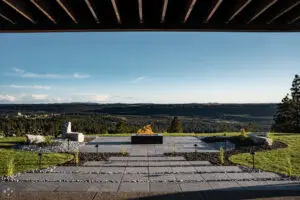
What Design-Build Contractors Actually Need From a Fire System Partner
Fire features have become a standard expectation in premium outdoor design. Clients want them. Architects draw them in. And as the contractor, you’re the one who has to make the vision actually work — with real gas lines, real installation conditions, and a real client standing by.