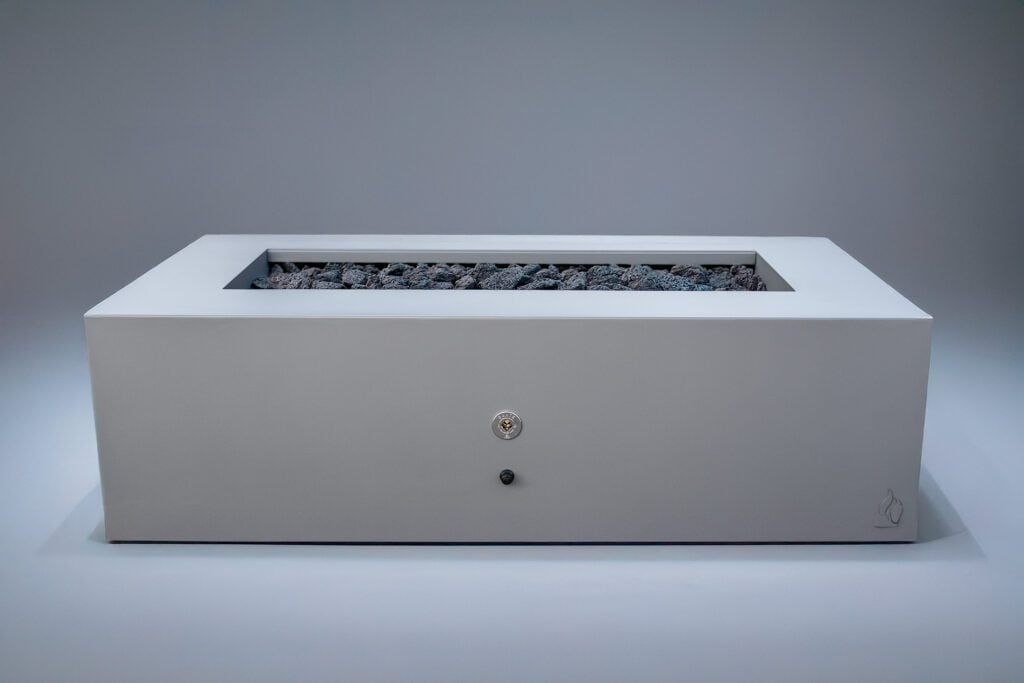

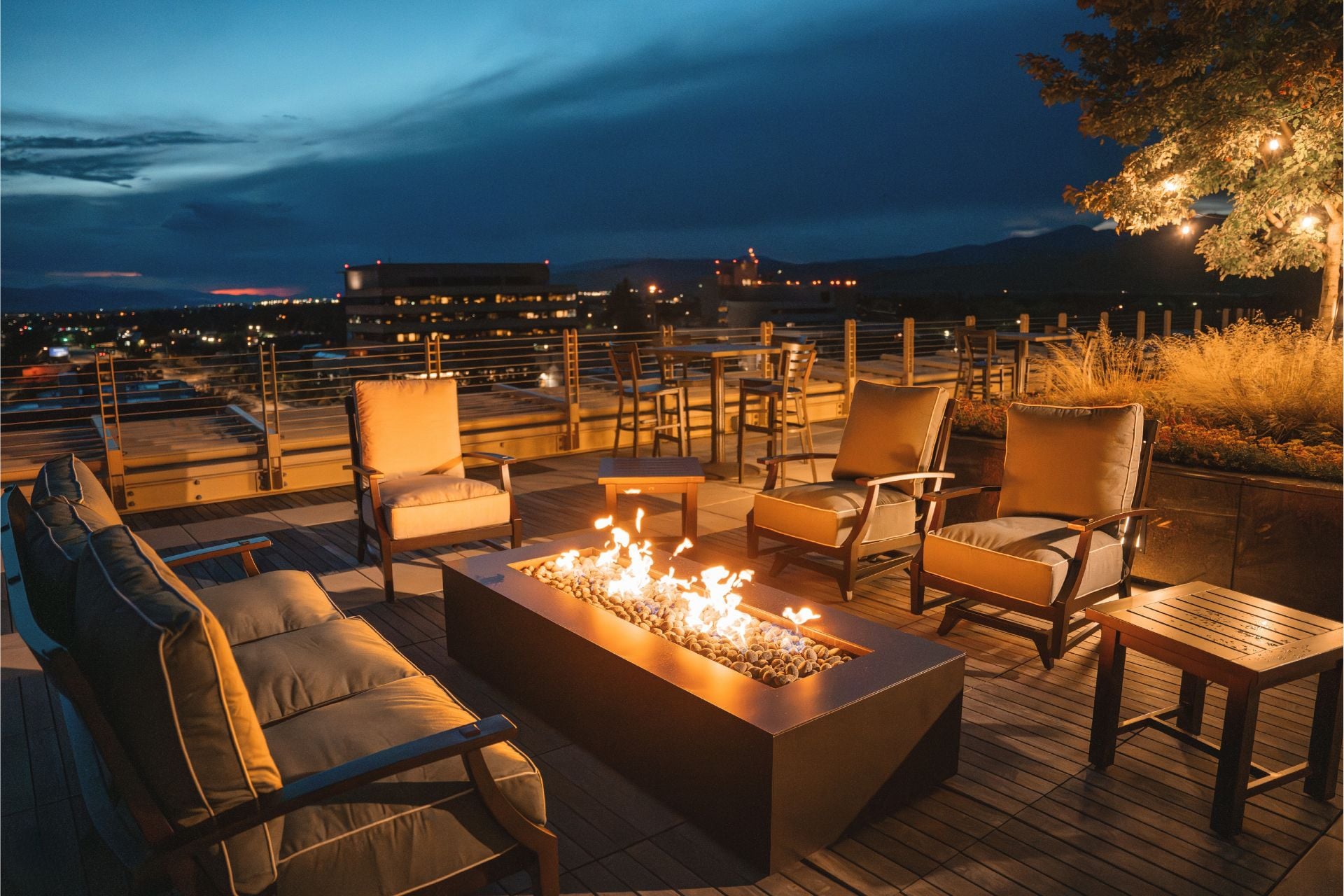
Every gas fire table in The Venture Series, The Venture Studio Series, and The Arbor Collection comes in a choice of three vessel materials: 3/16″ mild steel, 10-gauge Corten steel, and 3/16″ marine-grade aluminum. Each one has a job it does well. This is the case for aluminum, and for the projects where it is the right call.
The Weight Question
Aluminum is significantly lighter than either steel at the same wall thickness. For example, a 40″ by 40″ Steel Glacier is 208 pounds, while that same Glacier in aluminum is only 73 pounds. That difference is easy to overlook in a product photo and impossible to overlook on a job site.
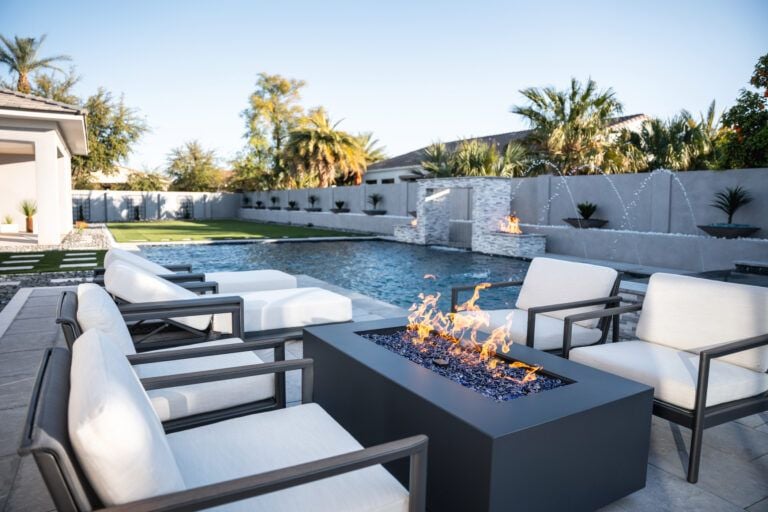
Elevated decks and rooftop terraces carry load limits, and a steel fire table can eat into that budget fast. An aluminum vessel delivers the same 3/16″ wall, the same welded construction, and the same profile at a fraction of the weight. For a rooftop amenity deck or a second-story terrace, that can be the difference between a straightforward installation and a conversation with a structural engineer.
Lighter does not come at the cost of strength. A 3/16″ aluminum vessel is just as strong as its steel counterpart. This is thick plate, cut, formed, and welded the same way as our steel tables, and it carries the same burner, the same media, and the same seasons of use without complaint. The material that holds a boat hull together is not flimsy.
The weight matters after installation too. A table that two people can reposition is a table that follows the season. Summer layout in the open, shoulder-season layout closer to the wall, no crew required.
What Marine-Grade Means
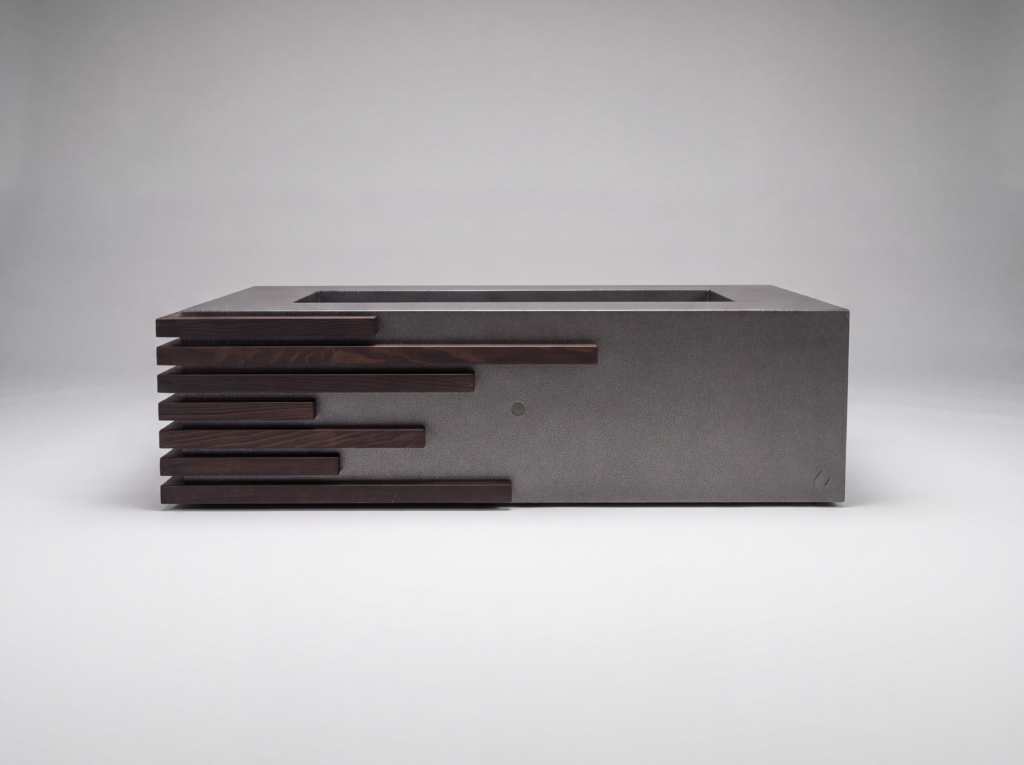
Marine-grade aluminum earned its name on boat hulls, where the material sits in saltwater and is expected to hold up for decades. That is the alloy we form and weld into fire table vessels.
Aluminum does not rust. Where mild steel depends on its finish and Corten protects itself by design, aluminum simply has no iron to oxidize. For coastal projects, poolside installations, humid climates, and tables that sit out uncovered through spring rain and summer sprinklers, the vessel material removes the question entirely.
Same Table, Same Fire
Choosing aluminum does not mean choosing a different fire table. The vessel is cut, formed, and welded in our shop in Missoula, finished and quality-checked by the same hands, and crated the same way before it ships to your site.
The burner is the same as well. Every table across the line runs the Warming Trends Crossfire brass burner, the system we specify for its flame quality and its track record in outdoor installations.
Where the Other Materials Still Win
Aluminum is not the answer to every project. Mild steel brings mass, and on a concrete patio or a table set on grade, that weight keeps a large vessel planted for good. Corten develops a protective patina over its first seasons outdoors and never asks for maintenance again. If the table is going somewhere it will never move, steel deserves a hard look.
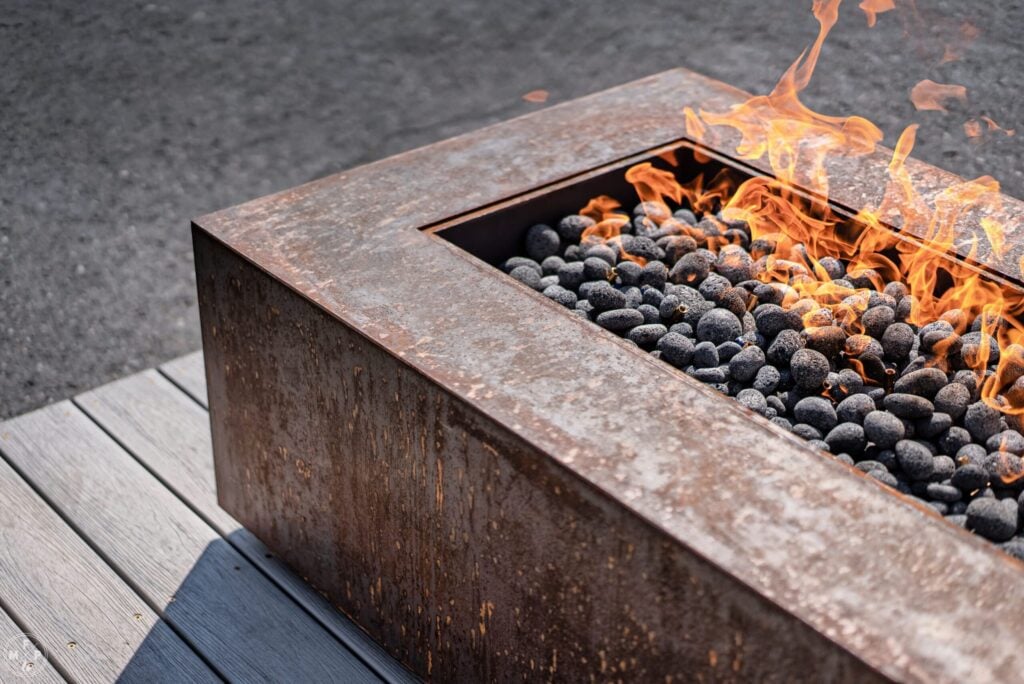
Finish is not part of that tradeoff. Aluminum takes powder coat just like mild steel does, so the full range of colors and textures carries across both materials. Choosing the lighter vessel does not narrow the palette.
But when the project involves height, water, salt, or the simple desire to move the table someday, aluminum is the material that earns its place.
Specifying Aluminum
All Venture and Arbor Series tables like the Yellowstone and the Arbor Accent can be configured in marine-grade aluminum at the time of order. Trade professionals working on rooftop, coastal, or multi-unit projects can find spec support and trade pricing through the Pro Partner Program. If you’d like to read a more in depth comparison of all three materials we offer, read May’s blog: Mild steel, corten, or marine-grade aluminum: choosing the vessel for a fire table built to live outside.
Every table is made to order in Missoula, Montana. Configure yours in aluminum today and see what the lighter vessel makes possible.
What goes in the vessel: a guide to fire media
The burner makes the flame. The media is what you look at. Everything sitting in the vessel of a gas fire table,
The Yellowstone Edge Is Here
The Venture Series · 2026 Release The Yellowstone Edge does not ask for attention. This is the newest addition to The Venture
Mild steel, corten, or marine-grade aluminum: choosing the vessel for a fire table built to live outside
Every Montana Fire Pits gas fire table, from the Venture Series to the Studio Series and even the Arbor Collection can be