
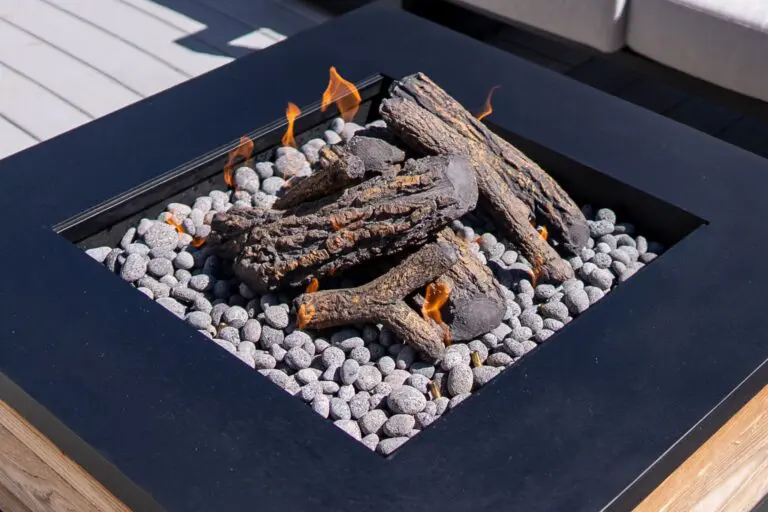
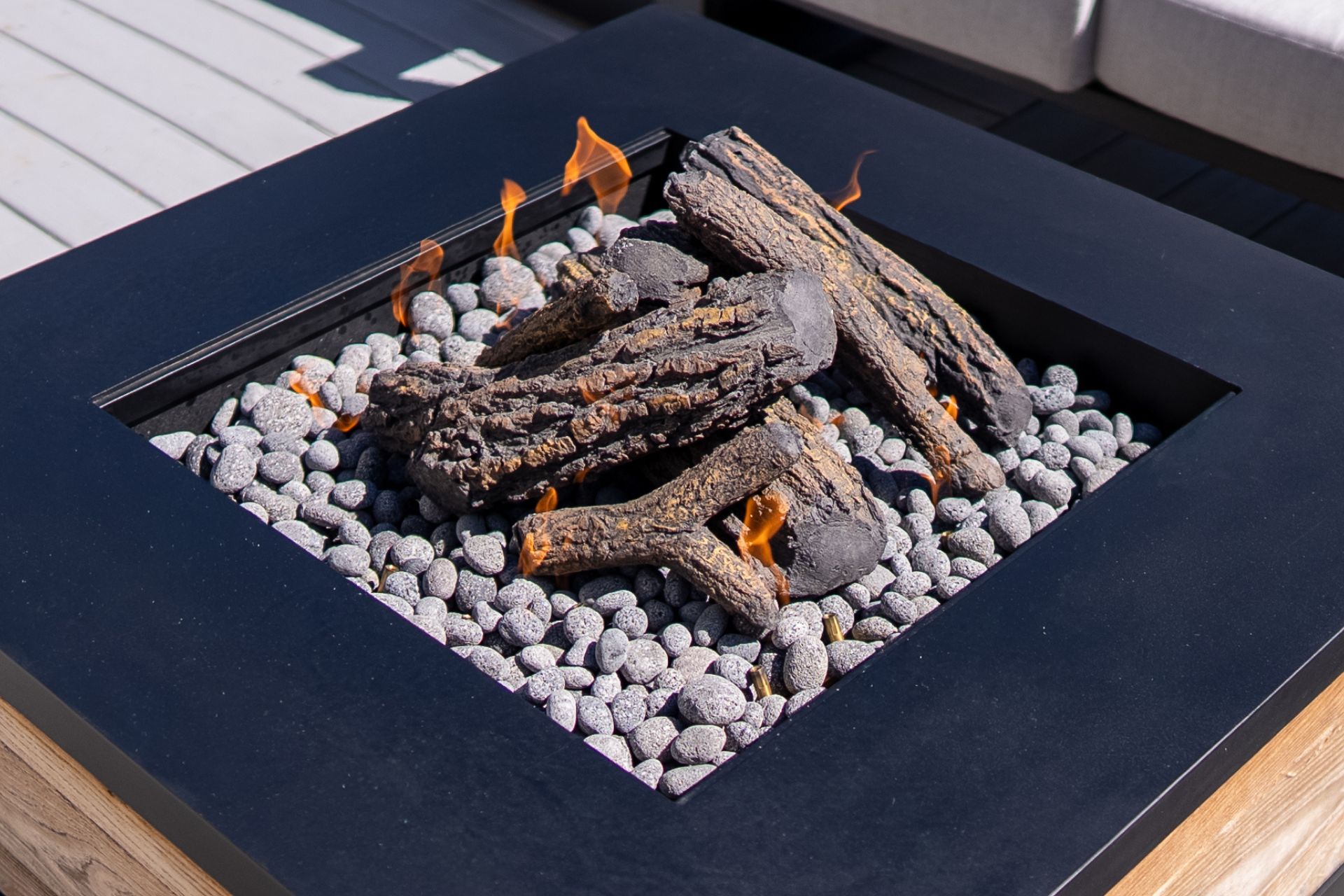
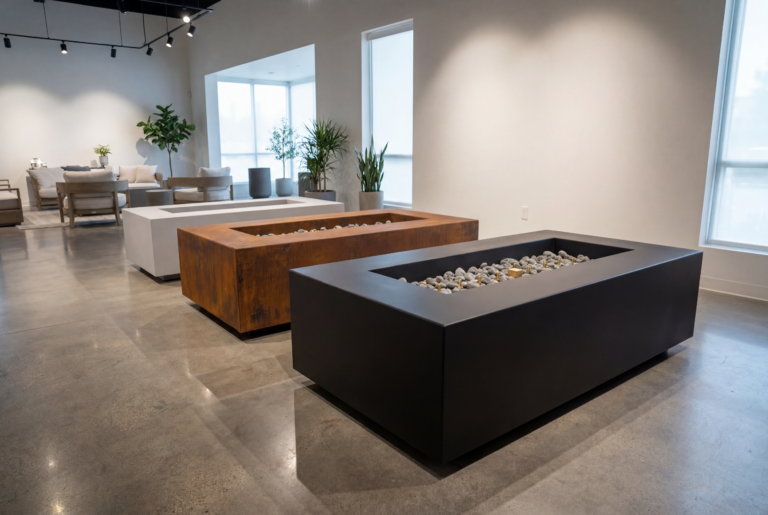
The burner makes the flame. The media is what you look at. Everything sitting in the vessel of a gas fire table, the stone, the logs, the spheres, shapes how the fire moves, where it catches light, and what the table looks like at noon when nothing is burning. Here is what we carry and where each one fits.
Lava stone
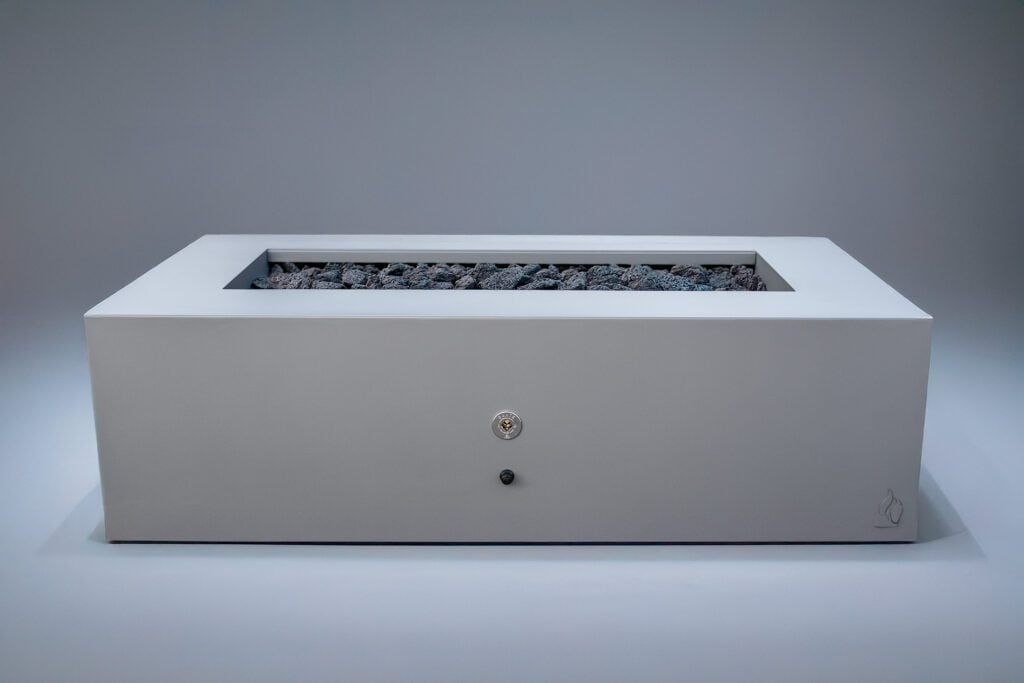
Lava stone is the working layer. It fills the pan around the burner, stands up to direct flame season after season, and gives the fire a bed to move through. Because it is volcanic rock, it has already been through worse than anything your fire table will do to it.
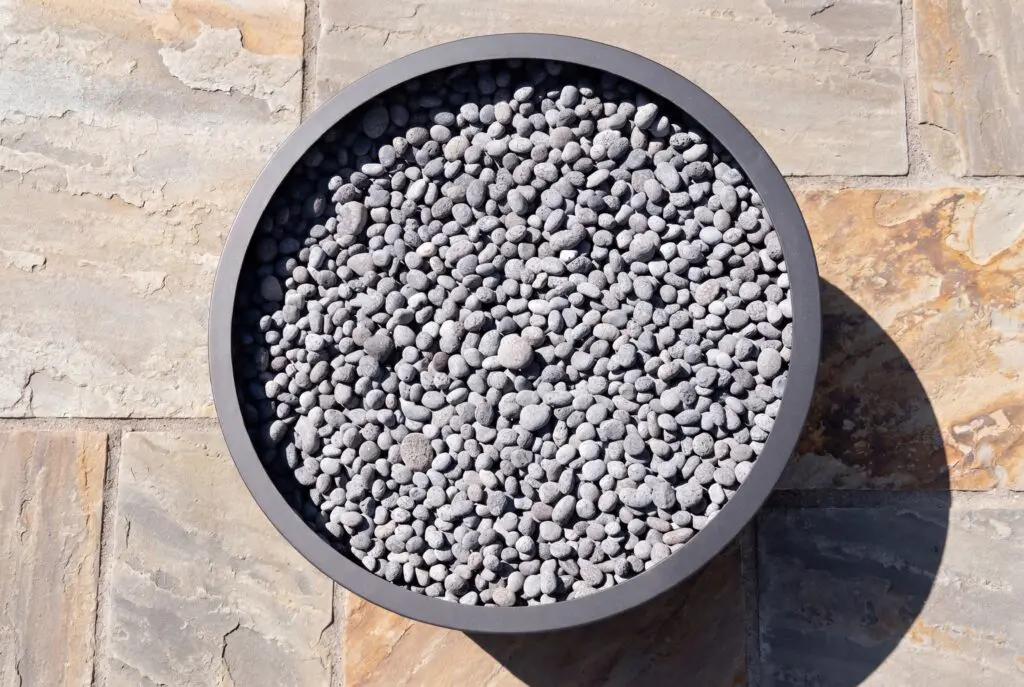
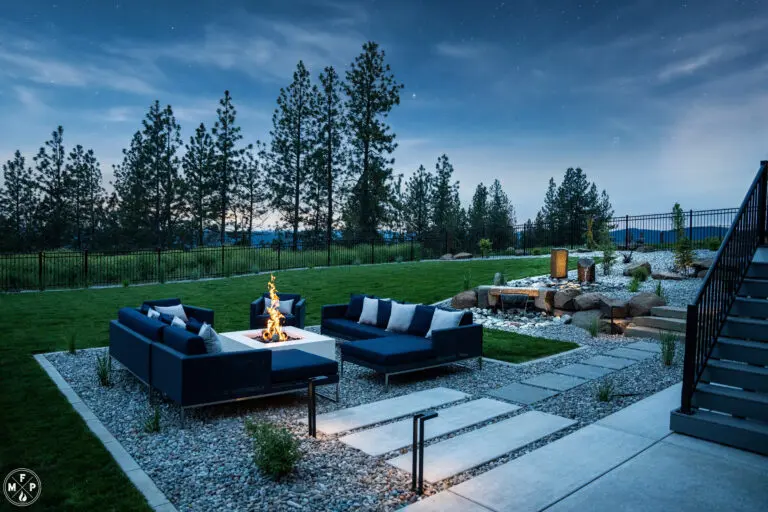
We carry gray lava stone in graduated sizes, from medium stones around 1″ to 2″ up to large 4″ to 6″ pieces, along with medium black lava rock and extra large gray tumbled stones with the rough edges worn smooth. Many owners run lava stone alone. The mixed sizes read as a dry riverbed with fire moving through it. It also works as the base layer under any of the media below.
Ceramic log sets
If you want the look of a wood fire without the smoke, the ash, or the trips to the woodpile, ceramic logs are the direct route. Each piece is cast from real timber, so the bark texture and checking come from an actual log, and the ceramic shrugs off direct flame.
The gas log lineup includes 9-piece sets in Country Oak, Driftwood, and Sierra Birch, plus the Charred and Oak Classic sets from Warming Trends, the same company behind the Crossfire brass burner in every table we build.
Steel log sets
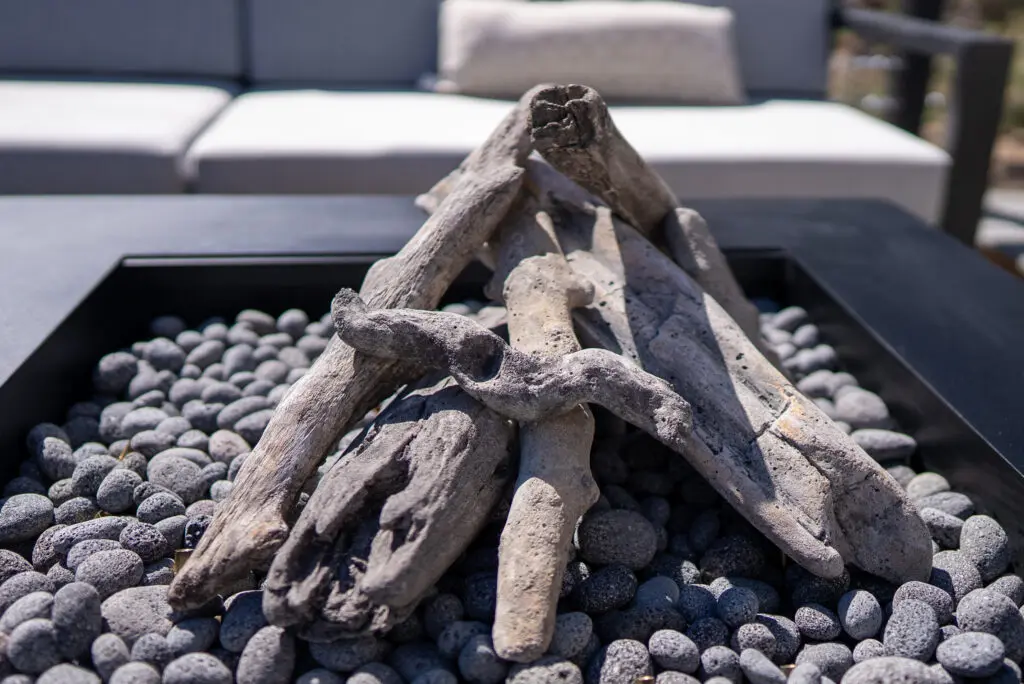
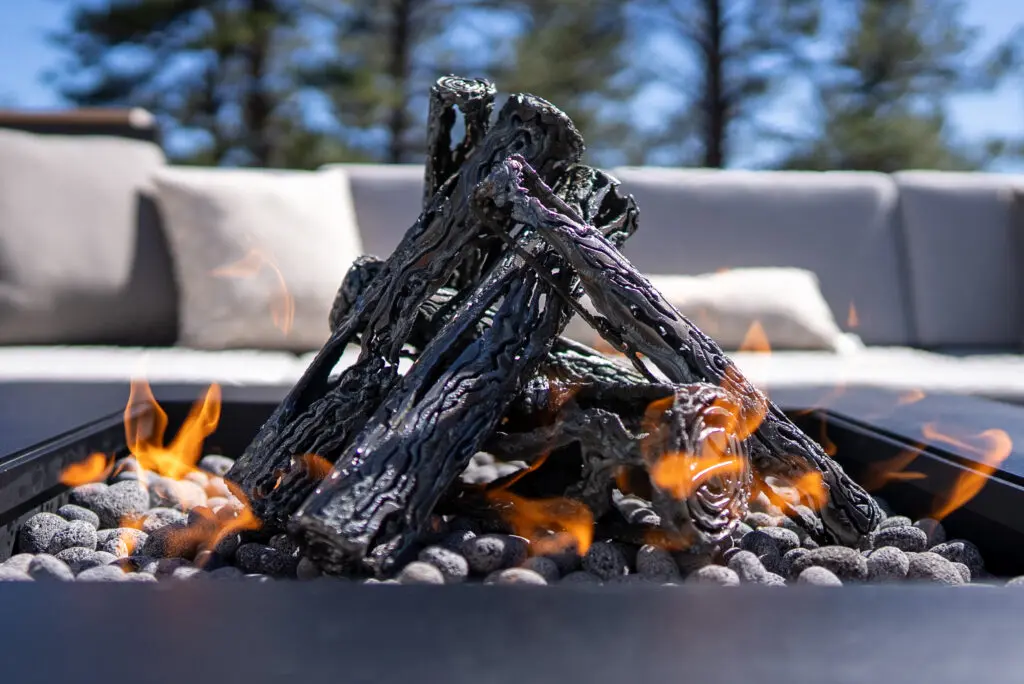
Steel logs are the media that matches the table. Each log is formed and welded from steel, textured to read as timber from across the patio, and built to sit in fire indefinitely. Where ceramic aims for realism, steel logs land somewhere between sculpture and firewood, and they age the way the rest of the table does.
Options run from the full Ponderosa set to a build-a-set option where you pick individual logs, along with Rustic Pine and welded log sets arranged as a single piece.
Cannonballs and river stones
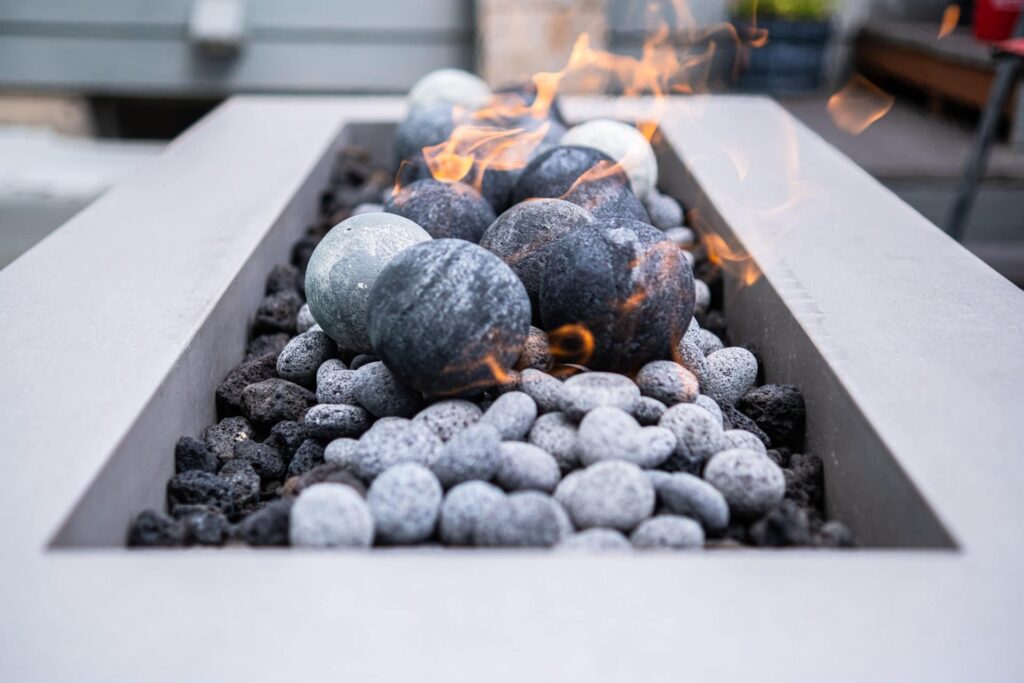
For a more architectural fire, spheres and stones replace the woodpile reference entirely. Ceramic cannonballs come in 4″ sets across a range of colors from matte black to cottage white, with a set builder for mixing sizes. Stainless steel IronFire balls reflect the flame instead of absorbing it.
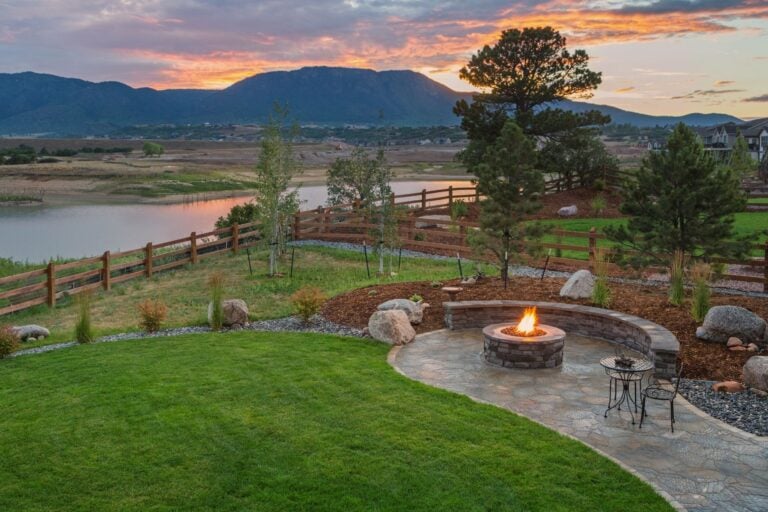
Ceramic river stones in 15-stone sets do the same work at a smaller scale, smooth shapes scattered through the fire bed. The usual approach: lava stone as the base to fill the pan, decorative media arranged on top where the flame runs through it.
Cover it when you’re done
Fire media lives outside, but it lasts longer and looks better when the vessel is covered between fires. Rain pooling in the pan, cottonwood fluff in June, snow in January, a cover ends all of it.
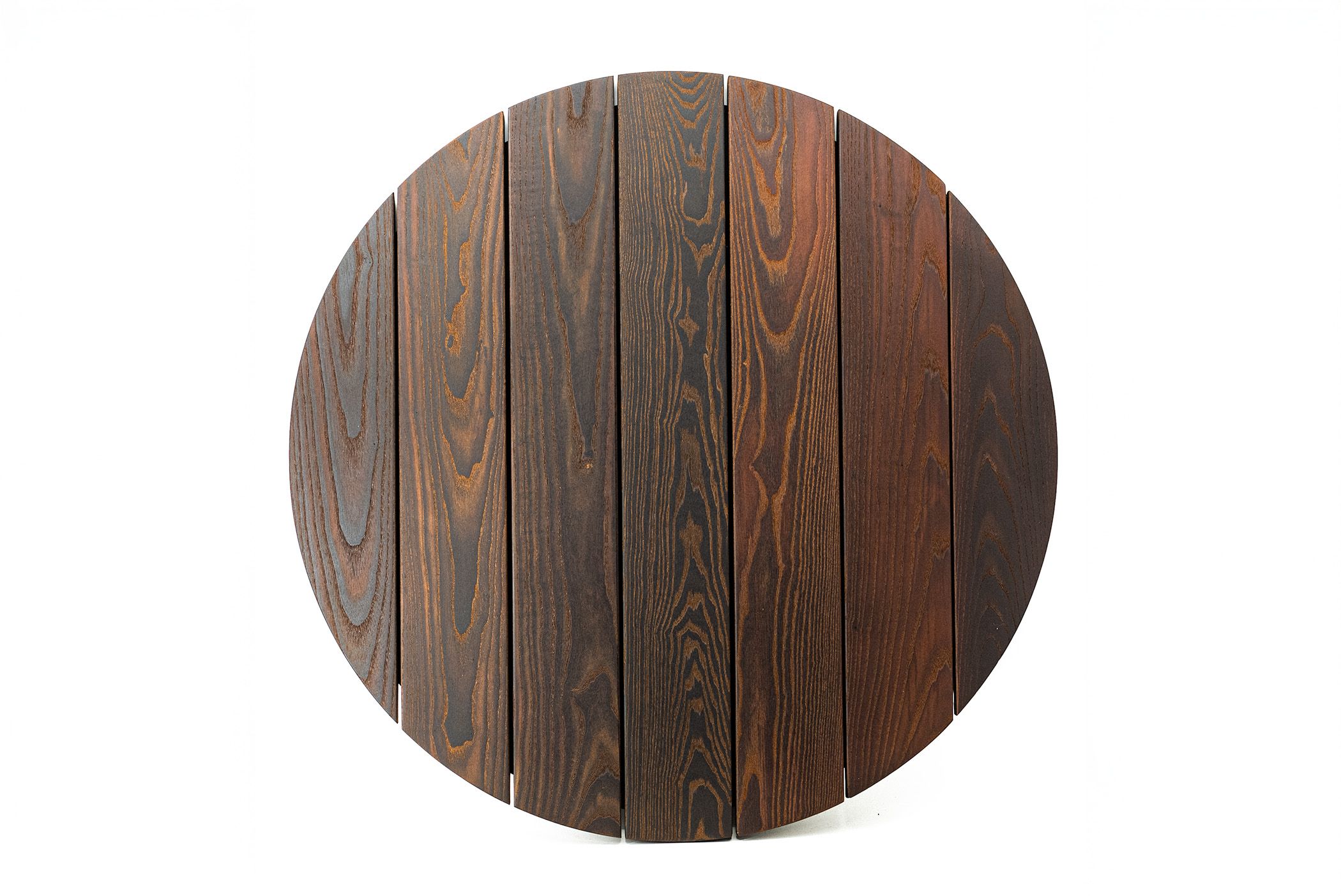
We build covers two ways. Aluminum covers in round, square, and rectangular fits drop over the vessel and turn the fire table into a solid tabletop, a place to set dinner down in the hours the fire is off. Arbor wood covers do the same with the wood-textured steel work of The Arbor Collection.
One thing to plan for: covers sit over the vessel, so a log set or cannonball set has to come out before the cover goes on. Lava stone and river stones sit low in the pan and stay put. If you burn with a log set or cannonball set, give it a dry place to rest between fires.
Build the fire you want to look at
Every table in The Venture Series ships ready for the media of your choice, and trade professionals speccing media and covers across a project can work through the Pro Partner Program. Browse the full fire media collection and build a fire bed worth looking at with the flame off.
Aluminum: the vessel material that earns its place
Fire features have become a standard expectation in premium outdoor design. Clients want them. Architects draw them in. And as the contractor, you’re the one who has to make the vision actually work — with real gas lines, real installation conditions, and a real client standing by.
The Yellowstone Edge Is Here
The Venture Series · 2026 Release The Yellowstone Edge does not ask for attention. This is the newest addition to The Venture
Mild steel, corten, or marine-grade aluminum: choosing the vessel for a fire table built to live outside
Every Montana Fire Pits gas fire table, from the Venture Series to the Studio Series and even the Arbor Collection can be